Why Mobile Loading and Controls Matter at kingmaker casino

Mobile casino design affects how quickly a game opens, how accurately you can place a bet, and whether a payment or login works when you are away from a desktop. For example, a slot with an 8 MB game package may load smoothly on Wi-Fi but pause on a crowded 4G connection. This guide explains loading speed, touch controls, portrait mode, mobile payments, and account access through practical casino situations. It also shows which features are useful and which small interface problems can disrupt a session.

What makes a mobile casino game load quickly?

Loading speed depends on the game file, video effects, adverts, and whether the casino uses a lightweight mobile lobby. Imagine opening a live roulette table from a train: a lobby that loads the game thumbnail first lets you choose a table before the full stream begins, while a heavy page may display a blank screen for several seconds. A useful casino app or browser site should show a progress indicator, keep the menu usable during loading, and avoid downloading every game image at once.

Connection changes also matter during play. If a player launches a progressive slot on 4G and the network briefly drops, the game should reconnect without accepting a second spin or losing the first result. Features such as cached menus, compressed images, and automatic reconnection can reduce waiting, but they cannot remove all delays caused by a weak signal. Before a longer session, opening one slot and one table game on the same device gives a practical comparison of how the platform behaves.

Mobile feature What the player may notice Useful test
Progressive loading Game artwork appears before the full game opens Open a slot on 4G and check whether the lobby remains responsive
Reconnect function The round resumes after a short connection loss Switch briefly from Wi-Fi to mobile data between rounds
Low-data mode Reduced animations or video quality Compare a live casino table with data saving enabled
Server-side game result The result is recorded even if the screen freezes Check the bet history after reopening the game

Are mobile casino controls accurate enough for fast play?

Touch controls should make the intended action clear before money is committed. On a blackjack table, a properly sized “Hit,” “Stand,” and “Double” button should remain separated even when the phone is held in one hand; a cramped layout can cause a player to tap “Double” when intending to hit. A confirmation prompt for high-value bets is useful, while a confirmation for every small spin can slow down a slot unnecessarily.

Autoplay and turbo functions need particular attention on smaller screens. For example, selecting 50 autoplay spins may open a settings panel for loss limits, win limits, and stop conditions, but the panel should show the selected stake before the session begins. In a game using a turbo-spin button, the player should still be able to pause after the current result and view the win amount. A reliable kingmaker casino interface should keep balance, stake, and active feature information visible rather than hiding them behind several menus.

  • On a roulette table, test whether the chip value changes visibly from $1 to $5 before placing a bet on red.
  • On a slot, check whether the spin button stays in the same position after the reels finish.
  • In a blackjack game, confirm that the selected action highlights before the hand moves on.
  • When using autoplay, set a stop rule such as a loss limit and verify it before pressing start.

Why does portrait mode matter on a phone?

Portrait mode is convenient when checking a game during a short break, but it can limit the amount of information shown at once. A portrait slot may place the reels above the controls and show the balance at the top, whereas a live baccarat table may need landscape mode to display betting areas, roadmaps, chat, and the dealer video together. If a game forces rotation during a hand, the change should preserve the current round and not hide the bet confirmation.

Screen orientation also affects accessibility and accidental taps. Consider a player using a phone with display magnification: a portrait layout with large buttons can be easier to operate than a scaled-down landscape table, but the player may need to scroll to reach the full bet slip. Good mobile games remember the chosen orientation, keep essential controls within reach, and avoid placing the cash-out or cancel button directly beside the stake control. Testing both orientations before depositing helps identify these differences. A concrete platform example involving https://kingmakercasino-australia.com/ shows how a named iGaming feature can be integrated into a practical user scenario.

Which mobile payment features reduce delays?

Mobile payment design is most useful when it shows the minimum and maximum transaction amounts before the payment method is selected. For example, a player choosing a debit card should see the accepted card types, any processing fee, and whether verification may be required instead of discovering those conditions after entering card details. A digital wallet can be faster for a returning player because the wallet app confirms the transaction without exposing card information to the casino checkout page.

Withdrawal handling should be checked separately from deposits. A casino may approve an instant wallet deposit but process a withdrawal only after identity checks, manual review, or a pending period. When comparing a mobile lobby such as , a practical test is to open the cashier, record the displayed withdrawal limit, and inspect whether bank transfer, card, and wallet options have different estimated times. The cashier should also show transaction status, so a player can tell whether a request is pending, approved, or rejected.

Payment situation Mobile function to check Player-facing result
First card deposit 3-D Secure or banking-app approval The transaction returns to the casino after bank verification
Wallet withdrawal Saved recipient details and status tracking The player can see pending or completed progress
Failed payment Clear error message and retry option The player knows whether to correct details or choose another method
Currency mismatch Displayed currency and conversion notice The stake and final charge are easier to compare

How should account access work on mobile?

Fast login is helpful, but security should not be sacrificed for convenience. A mobile casino may offer a saved username, fingerprint login, face recognition, or a one-time code; for instance, biometric access can open the account quickly while a new phone still requires password and email verification. A session timeout is also important on a shared device, especially if the player leaves the phone unlocked near an active cashier.

Account tools should remain usable even when the player is not inside a game. A clear profile area can show wagering progress, transaction history, bonus expiry, deposit limits, and self-exclusion settings without requiring a desktop. For example, if a reload offer requires a minimum deposit of $20 and has a 7-day expiry, those terms should be visible before activation, while the account history should identify the qualifying deposit and bonus credit separately.

Password recovery is another real test of mobile access. If a player forgets a password at night, the reset link should open in the same browser or app and explain whether a verification code expires after 10 minutes. After a successful reset, the platform should notify the account holder and close older sessions where possible. These steps matter because a fast login has little value if the recovery process loops between email, browser, and app screens.

Mobile casino quality is easiest to judge through small practical checks rather than attractive screenshots. Open a slot on a normal connection, rotate the phone during a demo round, inspect the bet history after a reconnect, and review the cashier before making a deposit. A kingmaker casino review should treat loading time, button placement, orientation, payment status, and secure account recovery as separate player tests. Together, these checks show whether the platform remains clear and controllable when the phone, connection, or payment process does not behave perfectly.

How Spin Empire search, filters, favorites, wallets and live lobby speed up finding games

Good navigation saves time and bankroll: a clear search bar, provider filters, favorites list, and a single-wallet model all change how you play in practice. This guide explains concrete features like the search bar, volatility filter, favorites playlist, bonus wallet, and live lobby table filters. You’ll learn which interface elements to click when you want demo mode, narrow stakes, save a hot game, move funds between wallets, or pick an open live table. Each section shows practical examples and actions you can take on platforms such as Spin Empire.

How does the search bar and game-tagging get you to a game fast?

Use the search bar and game tags to cut a library down from thousands to a few matches: type the slot name into the search bar, then apply the provider filter to show only NetEnt or Pragmatic titles. A search engine with auto-complete and “game-tag” chips (for tags like “Megaways”, “Bonus Buy”, or “High RTP”) is faster than scrolling; when I type “Gonzo” into Spin Empire it shows Gonzo’s Quest under the “popular” and “low volatility” tags. Search plus provider filter is essential when you know the mechanic you want — for example, use “RTP filter” and “free spins” tag together to find high-RTP free-spin slots and then toggle demo mode to try them without deposit.

Which filters should you use first to narrow options effectively?

Prioritize the filters that affect stake and volatility: use stake/coin size filters, volatility filter, jackpot filter, and game-type filter (slots, table, live) in that order. The popularity sort and “new games” filter are secondary but useful for discovery. Recommended quick filter workflow:

  • Stake filter — set your minimum and maximum bet per spin to match your bankroll.
  • Volatility filter — choose Low, Medium, or High volatility to control hit frequency.
  • Provider filter — select providers you trust for fair play and familiar mechanics.
  • RTP filter — set a minimum RTP (for example 96%+) to prioritize efficient payback rates.
  • Game-type filter — switch between “Slots”, “Live Casino”, and “Jackpots” to refine session goals.

How do favorites, watchlists, and saved collections change your play routine?

Create a favorites list or saved collection to avoid repeated searches: click the heart icon (add to favorites), then organize with folders or tags like “low stake” or “bonus buy”. Many platforms offer a “favorites sync” that keeps your list across desktop and mobile; using favorites plus a “recently played” feed shortens session setup to two taps. For example, when I saved a low-volatility roulette table and a bonus-buy slot into a “chill night” collection on , I could open that collection and jump into demo or real money modes without filtering again. A concrete platform example involving Spin Empire Casino shows how a named iGaming feature can be integrated into a practical user scenario.

What wallet models, deposit methods, and limits should you check before playing?

Know whether the platform uses a single wallet or split wallets (main wallet vs bonus wallet) and how internal transfer works; check the deposit methods like Visa/Mastercard, Skrill, and crypto for processing times. Look at the “transaction history” and “withdrawal limits” pages to confirm minimum and maximums before you chase bonuses with a bonus wallet. Typical payment method details you should compare:

Payment Method Typical Deposit Time Typical Withdrawal Time Common Daily Limit
Visa/Mastercard Instant 2–5 business days $2,000–$10,000
Skrill (e-wallet) Instant Instant–24 hours $1,000–$5,000
Cryptocurrency (e.g., BTC) Minutes Minutes–24 hours $10,000+

Also check whether the wallet supports internal transfers toward a “bet wallet” or if bonus funds sit separately in a bonus wallet subject to wagering requirements; use the “bonus terms” or “wagering calculator” feature to see how many spins are needed to clear a bonus.

How do live lobby filters, table limits, and seat availability affect live-game choice?

In the live lobby use the table limit filter, game-type filter (Live Roulette, Live Blackjack, Live Baccarat), and language or dealer filter to find comfortable tables. Watch the “seat availability” badge and the “waiting list” or “join queue” function: some tables let you join a queue if all seats are taken while others allow standing bets. Use the “latency indicator” and “stream quality” toggle to avoid a laggy dealer stream, and rely on the bet slip and “auto-bet” feature for consistent stakes; these live-lobby mechanics reduce interruptions and missed rounds.

How Gate of Olympus Deposits and Withdrawals Shape Your Casino Experience

The main benefit of understanding payment rules is better control over your casino budget and waiting time. In Gate of Olympus, the deposit method, KYC check, withdrawal queue, fees, and transaction limits can affect how quickly funds reach the game balance or bank account. These details also influence whether a welcome bonus is credited correctly and whether a cashout is approved without extra documents. This guide explains the practical payment features that casino players should check before depositing.

Which deposit methods offer the best player benefits?

The named benefit of card deposits is familiarity: Visa and Mastercard payments are usually easy to select, and the balance often updates within minutes. A player opening Gate of Olympus with a card should check whether the cashier accepts the specific card type, displays a minimum deposit such as €10, and applies a bonus code before confirming payment. Cards can be convenient for regular play, but some banks block gambling transactions, so a declined payment does not always mean the casino account is faulty.

The named benefit of e-wallets is speed and separation from the main bank account. Services such as Skrill, Neteller, and ecoPayz can send a deposit quickly while keeping card details away from the casino cashier. They may also support fast withdrawals, although the account holder normally needs the same e-wallet registered in their own name. For a player testing Gate of Olympus, the useful check is whether the cashier shows both deposit and withdrawal availability for the chosen wallet, rather than assuming every method works in both directions.

The named benefit of bank transfer is suitability for larger, traceable payments. A transfer can be useful when a player wants a clear banking record or needs to move an amount above a card limit, but it can take one to three business days before the casino credits the balance. Instant bank options, including open-banking payments in some markets, may be faster because the payment confirmation is sent electronically. The cashier should show the expected processing time, supported currency, and any reference number required for manual transfers.

The named benefit of cryptocurrency payments is flexible currency support and, in some cases, rapid confirmation. However, blockchain transfers are not reversible, exchange rates can change between sending and crediting, and network fees may reduce the received amount. A casino player using Bitcoin or another coin for Gate of Olympus should copy the exact wallet address, confirm the network, and compare the displayed deposit amount with the final credited balance. A small test payment is sensible when the method is unfamiliar.

How do fees and transaction limits change the real cost?

The named benefit of checking fees is accurate budgeting. A casino may advertise free deposits while the payment provider or bank adds a separate charge, and a currency conversion fee can apply when the account balance uses euros but the card is issued in another currency. Before confirming a payment, players should inspect the cashier summary for the amount charged, the amount credited, and any service fee. A €100 deposit that produces only €97 in playable funds should be assessed differently from a genuinely fee-free transaction.

Payment feature Typical player issue Practical benefit of checking it
Minimum deposit Small deposits may be rejected below €10 or €20 Prevents failed payments and unnecessary retries
Maximum deposit Cards and e-wallets can have daily or monthly caps Helps plan a larger bankroll without splitting payments
Minimum withdrawal A cashout may require at least €20 or €30 Shows whether a small balance can be withdrawn immediately
Withdrawal fee A fixed charge may apply, especially to bank transfers Allows comparison of the net amount received
Currency conversion Exchange rates can differ between the casino and payment provider Reduces surprises when the account and bank use different currencies

The named benefit of transaction limits is spending control, not simply access to larger payments. A daily deposit cap lets a player decide the maximum amount that can be funded in one day, while a withdrawal cap may require several requests for a larger approved balance. Limits can also change by account status, country, payment method, or verification level. In a Gate of Olympus session, checking the cashier limits before accepting a promotion prevents a player from depositing more than the method can process or expecting an instant high-value cashout.

Why do KYC checks delay some withdrawals?

The named benefit of KYC, meaning “know your customer,” is account security. The casino may request an identity document, proof of address, and confirmation that the payment method belongs to the account holder. This process helps prevent stolen cards, duplicate accounts, and money being sent to another person. A player can usually shorten delays by uploading a clear, unedited document through the account verification centre and making sure the name and address match the registration details.

The named benefit of completing KYC early is a smoother first withdrawal. Some casinos allow deposits and games before full verification but pause a cashout until checks are complete, which can surprise a new player who expected the withdrawal timer to start immediately. Proof of address may need to be dated within the last three months, while a payment card image may require the middle digits to be covered for security. The account message centre should explain exactly which document is missing instead of relying on repeated uploads. A concrete platform example involving https://demogateolympus.com/ shows how a named iGaming feature can be integrated into a practical user scenario.

The named benefit of a clear verification status is certainty about the next action. Useful account tools include a progress indicator, upload confirmation, support ticket number, and a message showing whether a document is accepted, rejected, or under review. On a platform offering Gate of Olympus, for example, the cashier may show “pending verification” separately from “withdrawal pending,” and those statuses mean different things. The first concerns identity evidence; the second usually concerns payment approval or release.

What processing times should a player expect?

The named benefit of separating casino processing from payment delivery is realistic planning. A withdrawal can pass through an internal review, a fraud or KYC check, and the payment provider’s own settlement period. An e-wallet may receive an approved payment on the same day, while a bank transfer may take one to five business days after approval; cards can be slower because some operators return funds through the original card route. The cashier’s wording should distinguish “requested,” “approved,” and “paid,” since each stage has a different clock.

The named benefit of a visible withdrawal history is evidence when a payment takes longer than expected. The history should record the request date, amount, method, status, and any cancellation option. Cancellation can be useful if a player notices a wrong bank account or decides to reverse a pending request, but it may disappear once the casino begins processing. A player reviewing Gate of Olympus payments should save the transaction ID and contact support with that reference instead of submitting duplicate withdrawals that may create confusion.

The named benefit of withdrawal-method matching is fewer compliance questions. Many casinos require a deposit method to be used once before sending winnings through it, and some return funds to the original card before allowing an e-wallet or bank transfer for the remaining balance. This is why a large win may not move through the fastest method immediately. The cashier’s terms should also explain whether several withdrawal requests are combined, cancelled automatically, or subject to a daily release schedule.

How can payment tools improve safer play?

The named benefit of deposit limits is a firm spending boundary. A player can often set daily, weekly, or monthly limits in the responsible-gaming panel, with increases taking effect only after a cooling-off period. This is more reliable than trying to remember a personal target during a winning or losing session. A useful account design displays the current limit, amount already deposited, remaining allowance, and the date when the limit resets.

The named benefit of reality checks is better awareness of session time and money movement. Some platforms can show pop-up reminders after a chosen period, while account statements list deposits, withdrawals, bonuses, and game activity over a selected date range. These tools help reveal patterns such as frequent small deposits or repeated cancelled withdrawals. Players should also read wagering requirements before using a deposit bonus, because a 30x playthrough condition may apply to the bonus, the deposit, or both and can delay withdrawal eligibility.

The named benefit of comparing the full payment journey is fewer expensive surprises. Before playing Gate of Olympus, confirm the minimum and maximum amounts, fee policy, KYC documents, withdrawal route, expected approval time, and responsible-play controls. The link can be checked as an example of where a player may review the game destination and then compare its cashier options with personal payment needs. A convenient deposit is useful, but a transparent withdrawal process and manageable limits matter just as much.

Vegazone Live Table Guide: How Dealer Format, Limits and Controls Change Your Play

As an experienced player I want to explain why picking the right live table matters: dealer format, table limits, side bets, speed, and the interface controls all change your session outcome and comfort. I’ll name concrete mechanics—seat selection, bet repeat, side-bet paytables—and show what to check before you join. Read on to learn specific scenarios where a few clicks or a different dealer format will alter your bankroll swing and time commitment.

How does dealer format affect pace and interaction?

When I moved from a classic studio blackjack table to an “immersive” HD table I noticed two clear differences: camera angles and dealer chat control. In practice, at a studio table with a single dealer I had a 12–15 second decision window and chat enabled, so I used bet-repeat and the on-screen chip hotkeys; at an immersive table the dealer moved faster, decision windows shrank to about 8–10 seconds and the platform offered a dedicated “mute dealer” toggle. A specific usage scenario: join a low-limit studio seat (min €1) for relaxed play and use chat to confirm splits, but switch to an immersive VIP seat (min €25) when you want faster rounds and rely on the “auto-stand” button if available.

Which table limits and bet sizes should you check before sitting?

I always open the table lobby and read min/max and stack size before committing funds—this is where bankroll management meets reality. For example, at a live roulette table I once saw Min €0.20 / Max €500 advertised but when joined the pre-set single-chip values only allowed €1 increments; in that session my plan to hedge with €0.50 chips failed. A concrete usage scenario: if your session bankroll is €50, pick a blackjack table with min €0.50 and max €100 and use the platform’s chip shortcuts to keep bets between 1%–5% of your bankroll; if you plan to use progressive staking, choose a table with higher max so you don’t hit the cap on a winning streak.

How do side bets change payouts, variance, and decision-making?

Side bets are separate wagers that settle independently and often come with different payouts—treat them as optional insurance for volatility. For instance, at a live blackjack table I placed €10 on the main hand and added a €2 Perfect Pairs side bet; when a perfect pair hit I collected a 25:1 paytable payout (common layout: mixed pair 6:1, colored pair 12:1, perfect pair 25:1), which returned €50 on that €2 stake. A specific usage scenario: if you want occasional big swings without changing your main bet, add a small fixed side-bet (5%–20% of your base wager) and check the displayed paytable first—those shown tables tell you exact multiples so you can calculate one-off prizes during a session. A concrete platform example involving Vegazone casino shows how a named iGaming feature can be integrated into a practical user scenario.

What happens when you play on turbo or slow tables—how does speed affect tactics?

Table speed changes how many rounds you see per hour and which tactical tools are usable; I timed a baccarat turbo table at roughly 55–65 rounds per hour versus 28–35 on a regular table, so variance felt amplified on turbo. A concrete usage scenario: on a turbo baccarat table where rounds come every 30–40 seconds, use shorter betting patterns (flat bets or fixed percentages) because you will encounter more outcomes in the same time; on a slow blackjack table with a 20–25 second shot-clock, you can rely on hand-reading and use the session history panel to adjust count-based or trend-based plays.

Which interface controls and player tools should you master before betting?

Know the platform tools: seat selector, chip presets, bet repeat, cancel, cashout, time bank, and bet-behind are the controls that matter in live play. For example, at one live roulette table I used the “bet repeat” and “last bet” buttons to reapply a €2 split in three consecutive spins, saving time; at another I used the “time bank” when a hand required a slower decision. A practical illustration: on I tested the “bet behind” option on a crowded dealer seat—placing €5 behind a high-limit player allowed me to mirror their action without seat selection, and I used the session stats panel to monitor win/loss streaks while keeping stakes steady.

Quick checklist and a practical comparison table to use before joining any live table

Before clicking “Sit” I run through a short checklist that saves mistakes in real time: verify min/max, confirm side-bet paytable, check decision timers, test the chat/mute toggle, and confirm whether the table uses continuous shuffle (low penetration) or shoe-based dealing (higher penetration). A usage scenario: when switching casinos mid-session I compare these five points to decide if I should continue or cash out and move.

  • Check min/max and chip denomination (scenario: bankroll €50 → pick table min ≤ €1).
  • Open the side-bet paytable (scenario: €2 side-bet with 25:1 perfect pair payout).
  • Observe the shot-clock and test time-bank (scenario: 8s vs 20s decision windows).
  • Confirm dealer language and mute/chat options (scenario: mute as needed in late-night sessions).
  • Note shuffle method and expected rounds/hour (scenario: turbo ≈ 60 r/hr, standard ≈ 30 r/hr).

Why spinfin games Search Tools Matter When Managing a Casino Session

Finding a suitable casino game can take longer than playing it when a platform offers hundreds of titles. Search boxes, filters, favorites, wallets, and live-game menus help players move from browsing to a controlled session. For example, a volatility filter can narrow a slot selection, while a wallet screen shows whether funds are available for casino play. This guide explains how these tools work in real use, what details to check, and how navigation features can make game management less confusing.

How does casino search save time?

A search bar is most useful when a player already knows part of a game title, provider, or mechanic. Typing “blackjack” might return table games, live dealer versions, and related variants, while entering a provider name can display only that studio’s releases. In a practical session, a player looking for a five-reel slot with free spins can search the title or keyword instead of opening every slot category one by one.

Search results are not always limited to exact matches, so the result labels deserve attention. A query for “roulette” may show European roulette, American roulette, live roulette, and roulette-themed slots. European roulette has a single zero, while American roulette includes an additional double zero, so checking the game card before launching prevents an avoidable rules mistake.

Many casino interfaces also remember recent searches or recently opened games. If a player checks three blackjack tables during a lunch break and returns later, a “recently played” row can provide a faster route back. This is convenient, but it should not be confused with a recommendation based on personal suitability; the row usually reflects activity, not lower risk or better odds.

Which filters are worth using before opening a game?

Filters turn a broad catalogue into a shorter list based on practical details such as game type, jackpot status, number of paylines, volatility, maximum win, or live availability. For example, selecting “low volatility” and “under £1 stake” may help a player locate games designed for smaller individual wagers. Volatility describes how often and how sharply a game tends to pay, not whether a particular session will produce a profit.

Stake filters are especially useful when the balance is limited. A player with £20 might select games starting at £0.10 or £0.20 rather than opening a title that requires £1 per spin. At £0.20 per spin, 100 spins would represent £20 before any wins, although the actual balance changes with every result. The filter helps control the starting stake, but it does not guarantee that the budget will last.

Live casino filters can separate blackjack, roulette, baccarat, game shows, and tables by limits or language. Suppose a player wants a live blackjack table with a £5 minimum and a British host; selecting those fields can remove £25-minimum tables from the results. A useful lobby also shows the table limit, number of seats, and whether a seat is open before the player commits funds.

Promotional labels need a separate check because “featured,” “new,” or “popular” may be sorting categories rather than financial advantages. If a slot is marked with a bonus badge, the associated terms may require a minimum deposit, a wagering target, or specific eligible games. Opening the promotion details before filtering for bonus titles helps prevent choosing a game that does not contribute fully to the offer.

What should a player check before saving favorites?

Favorites are most helpful when they create a personal shortlist instead of forcing repeated searches. A player testing several slots could save one low-stake title, one live roulette table, and one blackjack game, then return to those choices from a single menu. The practical benefit is clear when the lobby contains hundreds of games and the player wants to compare a few known options rather than browse again.

The favorite icon can behave differently across devices or account states. On one platform, the list may sync between a phone and desktop after login; on another, it may be stored only in the current browser. For example, a player who saves a game on a mobile device should check the desktop account before assuming the list has transferred.

Favorites should also be reviewed after a game changes its stake range or disappears from the lobby. A saved table may later show as unavailable because its opening hours have ended, while a saved slot may load with a different minimum bet after a software update. Removing unavailable entries keeps the list useful and reduces the chance of launching a substitute game without noticing.

How do wallets help manage games and balances?

A wallet normally displays the main cash balance, bonus funds, pending transactions, and sometimes separate balances for sports or casino products. Before launching a £2-per-spin slot, a player can use the wallet to confirm whether the money is cash or bonus credit. That distinction matters because bonus funds may have wagering requirements, expiry dates, or game restrictions. A concrete platform example involving spinfin games shows how a named iGaming feature can be integrated into a practical user scenario.

Some platforms use a single wallet, while others require a player to transfer money into a casino balance. In a split-wallet example, a £50 deposit may remain in the main account until £20 is moved to casino play, after which the casino lobby shows £20 available. A failed launch or insufficient-funds message may simply mean that the transfer was not completed, not that the game itself is unavailable.

Transaction history is another practical wallet feature. If a player deposits £30, receives a £10 bonus, and later withdraws £25, the history can show the date, method, amount, and status of each event. Checking this record is useful when a withdrawal is pending or a bonus balance seems different from the amount shown during the previous session.

Deposit limits, reality checks, and session reminders often sit near wallet controls rather than inside the game lobby. A player who sets a £40 daily deposit limit may receive a blocked-deposit message after reaching it, even if the wallet still displays a small cash balance. Treating these controls as part of game management makes it easier to stop, review spending, and avoid using a second payment method simply to continue.

How can live-game navigation prevent costly mistakes?

Live-game lobbies usually present tables as tiles with a host image, game name, minimum and maximum stakes, and a join button. Before joining live blackjack, a player can compare a £2–£200 table with a £10–£1,000 table and choose one that matches the intended stake. The table limit is more important than the visual presentation because it determines the permitted wager range.

Seat maps and status markers also affect the experience. A table marked “full” may allow viewing but not betting, while a table marked “open” may still require the player to wait for the next betting round. For example, joining roulette after the countdown has started may leave only a few seconds to place a bet, so checking the round timer before confirming a wager is a useful habit.

Sorting by lowest stake, fastest game, or available seats can make a live lobby easier to use. A player with a £25 session budget might sort by lowest limit and choose a £1 roulette table rather than scrolling through premium tables first. The sort order changes visibility, not the mathematical odds, so it should be treated as a navigation aid rather than a performance signal.

Good live-game menus also provide clear rules, payout information, chat controls, and responsible-gambling links without hiding them behind the betting screen. When comparing tables, a player can open the rules panel to confirm blackjack payouts, roulette bet types, or side-bet conditions before placing money. This small check is particularly valuable when two tables look similar but use different rules or minimums.

Which layout works best for a controlled session?

A practical routine is to search first, filter second, inspect the game card third, and add only suitable titles to favorites. For instance, a player may search for blackjack, filter for a £2 minimum, read the rules, save two tables, and then use the wallet to confirm the planned budget. This sequence separates game discovery from the decision to stake money.

  • Use search when the title, provider, or mechanic is already known.
  • Use stake and game-type filters to remove unsuitable options before opening them.
  • Check volatility, paylines, table limits, and bonus eligibility on the game information panel.
  • Use favorites for a short list of games that have already been reviewed.
  • Check the wallet, transaction history, and session controls before continuing.
Player task Useful platform tool What to check in practice
Find a small-stake slot Stake filter and search Minimum spin, maximum stake, and bonus eligibility
Compare roulette tables Live-game filters Single or double zero, table limit, and round timer
Return to tested games Favorites or recent games Whether the list syncs and whether the title is still available
Review available funds Wallet and transaction history Cash balance, bonus balance, pending deposits, and withdrawals

In everyday use, can be approached through this same sequence: search for a specific title, filter by stake or game type, save a short list, and review the wallet before launching. A player comparing two live blackjack tables might use the lobby limits first, then inspect the rules and choose the table that fits the planned wager. The value comes from making each choice visible rather than allowing promotional rows or fast-play buttons to decide the route.

The most useful platform is not necessarily the one with the largest catalogue; it is the one that makes game information, balance details, and navigation states easy to verify. If a player can see the minimum stake, bonus rules, wallet status, favorite list, and live-table availability without guessing, tools become practical session controls rather than decorative interface features. Search and filters find the options, favorites organize them, live menus explain the table conditions, and the wallet shows what can actually be used.

ผ่าฮาร์ดดิสก์

        ลักษณะทั่วไป ของฮาร์ดดิสก์
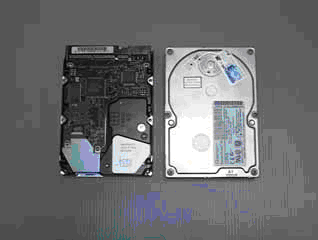
                         

ระบบฮาร์ดดิสค์แตกต่างกับแผ่นดิสเกตต์ ซึ่งโดยทั่วไปแล้วจะมีจำนวนหน้าสำหรับเก็บบันทึก ข้อมูลมากกว่าสองหน้า นอกจากระบบฮาร์ดดิสค์จะเก็บบันทึกข้อมูลเหมือนแผ่นดิสเกตต์ยังเป็นส่วน ที่ใช้ในการอ่านหรือเขียนบันทึกข้อมูลเหมือนช่องดิสค์ไดรฟ์

     แผ่นจานแม่เหล็กของฮาร์ดดิสค์ จะมีความหนาแน่นของการจุข้อมูลบนผิวหน้าได้สูงกว่าแผ่น ดิสเกตต์มาก เช่น แผ่นดิสเกตต์มาตราฐานขนาด 5.25 นิ้ว ความจุ 360 กิโลไบต์ จะมีจำนวนวงรอบ บันทึกข้อมูลหรือเรียกว่า แทร็ก(track) อยู่ 40 แทร็ก กรณีของฮาร์ดดิสค์ขนาดเดียวกันจะมีจำนวน วงรอบสูงมากกว่า 1000 แทร็กขึ้นไป ขณะเดียวกันความจุในแต่ละแทร็กของฮาร์ดดิสค์ก็จะสูงกว่า ซึ่งประมาณได้ถึง 5 เท่าของความจุในแต่ละแทร็กของแผ่นดิสเกตต์

     เนื่องจากความหนาแน่นของการบันทึกข้อมูลบนผิวแผ่นจานแม่เหล็กของฮาร์ดดิสค์สูงมาก ๆ ทำให้หัวอ่านและเขียนบันทึกมีขนาดเล็ก ตำแหน่งของหัวอ่านและเขียนบันทึกก็ต้องอยู่ในตำแหน่ง ที่ใกล้ชิดกับผิวหน้าจานมาก โอกาสที่ผิวหน้าและหัวอ่านเขียนอาจกระทบกันได้ ดังนั้นแผ่นจานแม่ เหล็กจึงควรเป็นแผ่นอะลูมิเนียมแข็ง แล้วฉาบด้วยสารแม่เหล็ก

     ฮาร์ดดิสค์จะบรรจุอยู่ในกล่องโลหะปิดสนิท เพื่อป้องสิ่งสกปรกหลุดเข้าไปภายใน ซึ่งถ้าต้อง การเปิดออกจะต้องเปิดในห้องเรียก clean room ที่มีการกรองฝุ่นละออกจากอากาศเข้าไปในห้อง ออกแล้ว ฮาร์ดดิสค์ที่นิยมใช้ในปัจจุบันเป็นแบบติดภายในเครื่องไม่เคลื่อนย้ายเหมือนแผ่นดิสเกตต์ ดิสค์ประเภทนี้อาจเรียกว่า ดิสค์วินเชสเตอร์(Winchester Disk)

     ฮาร์ดดิสค์ส่วนใหญ่จะประกอบด้วยแผ่นจานแม่เหล็ก(platters) สองแผ่นหรือมากกว่ามาจัด เรียงอยู่บนแกนเดียวกันเรียก Spindle ทำให้แผ่นแม่เหล็กหมุนไปพร้อม ๆ กัน จากการขับเคลื่อน ของมอเตอร์ด้วยความเร็ว 3600 รอบต่อนาที แต่ละหน้าของแผ่นจานจะมีหัวอ่านเขียนประจำเฉพาะ โดยหัวอ่านเขียนทุกหัวจะเชื่อมติดกันคล้ายหวี สามารถเคลื่อนเข้าออกระหว่างแทร็กต่าง ๆ อย่างรวดเร็ว
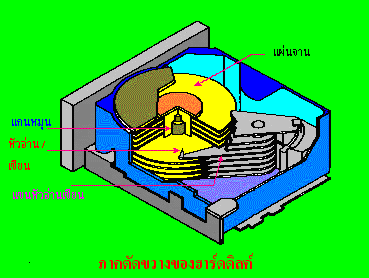


                                จากรูปเป็นภาพตัดขวางของฮาร์ดดิสค์แสดงแผ่นจาน แกนหมุน Spindle หัวอ่านเขียน และก้านหัวอ่านเขียน
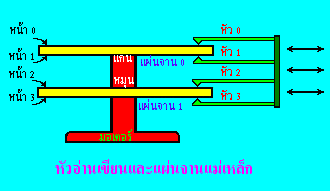
                                                                                                  

     จากรูปแสดงฮาร์ดดิสค์ที่มีแผ่นจาน 2 แผ่น พร้อมการกำกับชื่อแผ่นและหน้าของดิสค์ ผิวของ แผ่นจานกับหัวอ่านเขียนจะอยู่เกือบชิดติดกัน คือห่างกันเพียงหนึ่งในแสนของนิ้ว และระยะห่างนี้ ในระหว่างแทร็กต่าง ๆ ควรสม่ำเสมอเท่ากัน ซึ่งกลไกของเครื่องและการประกอบฮาร์ดดิสค์ต้อง ละเอียดแม่นยำมาก การหมุนอย่างรวดเร็วของแผ่นจาน ทำให้หัวอ่านเขียนแยกห่างจากผิวจาน ด้วยแรงลมหมุนของจาน แต่ถ้าแผ่นจานไม่ได้หมุนหรือปิดเครื่อง หัวอ่านเขียนจะเลื่อนลงชิดกับ แผ่นจาน ดังนั้นเวลาเลิกจากการใช้งานเรานิยมเลื่อนหัวอ่านเขียนไปยังบริเวณที่ไม่ได้ใช้เก็บข้อมูล ที่เรียกว่า Landing Zone เพื่อว่าถ้าเกิดการกระแทรกของหัวอ่านเขียนและผิวหน้าแผ่นจานก็จะไม่มีผลต่อข้อมูลที่เก็บไว้

     ฮารด์ดิกส์เป็นอุปกรณ์ที่รวมเอาองค์ประกอบ ทั้งกลไกการทำงาน และอุปกรณ์อิเล็กทรอนิกส์ เข้าไว้ด้วยกัน แม้ว่าฮาร์ดดิสก์ นั้นจะได้ชื่อว่าเป็นอุปกรณ์ที่มีความซับซ้อนที่สุด ในด้านอุปกรณ์ที่มีการเคลื่อนไหว แต่ในความเป็นจริงแล้วการอธิบายการทำงาน ของฮาร์ดดิสก์นั้นถือว่าได้ง่าย ภายในฮาร์ดดิสก์นั้นจะมีแผ่น Aluminum Alloy Platter หลายแผ่นหมุนอยู่ด้วยความเร็วสูง โดยจะมีจำนวนแผ่นขึ้นอยู่กับแต่ละรุ่นแต่ละยี่ห้อต่างกันไป เมื่อผู้ใช้ พิมพ์คำสั่งให้คอมพิวเตอร์ทำงาน แขนกลของฮาร์ดดิสก์ จะรอบรับคำสั่งและเคลื่อนที่ ไปยังส่วนที่ถูกต้องของ Platter เมื่อถึงที่หมายก็จะทำการอ่านข้อมูลลงบนแผ่นดิสก์นั้น หัวอ่านจะอ่านข้อมูลแล้วส่งไปยัง ซีพียู จากนั้น ไม่นานข้อมูลที่ต้องการก็จะปรากฏ การทำงานเขียนอ่านข้อมูลของฮาร์ดดิกส์ จะมีการทำงาน คล้ายกับการทำงาน ของของเทปคาสเซ็ท แพล็ตเตอร์ของฮาร์ดดิสก์ นั้นจะเคลือบไปด้วยวัตถุจำพวกแม่เหล็ก ที่มีขนาดความหนา เพียง 2-3 ในล้านส่วนของนิ้ว แต่จะต่างจากเทปทั่วไปคือ ฮาร์ดดิสก์นั้นจะใช้หัวอ่านเพียง หัวเดียวในการทำงาน ทั้งอ่าน และเขียนข้อมูลบนฮาร์ดดิกส์ ส่วนเขียนข้อมูลลงบนฮาร์ดดิสก์นั้นหัวอ่านจะได้ รับกระแสไฟฟ้าผ่านเข้าสู่ คอยล์ของหัวอ่าน เพื่อสร้างรูปแบบแม่เหล็กบนสื่อ ที่เคลือบอยู่บนแพล็ตเตอร์ซึ่งเท่า กับเป็นการเขียนข้อมูลลงบน ฮาร์ดดิสก์ การอ่านนั้น ก็จะเป็นการแปลงสัญญาณรูปแบบแม่เหล็กที่ได้บันทึก อยู่บนฮาร์ดิสก์กลับแล้วเพิ่ม สัญญาณและทำการ ประมวลผล ให้กลับมาเป็นข้อมูลอีกครั้งอีก

     จุดที่แตกต่าง กันของการเก็บข้อมูลระหว่าง ออดิโอเทปกับฮาร์ดดิสก์นั้นก็ คือเทปจะเก็บข้อมูลในรูปแบบของ สัญญาณ อนาล็อก แต่สำหรับฮาร์ดดิสก์นั้นจะ เก็บในรูป สัญญาณ ดิจิตอลโดยจะเก็บเป็นเลขฐานสองคือ 0 และ 1 ฮาร์ดดิสก์ จะเก็บข้อมูลไว้ใน Track หรือ เส้นวงกลม โดยจะเริ่มเก็บข้อมูลที่ด้านนอกสุด ของฮาร์ดดิสก์ก่อน จากนั้นจึงไล่เข้ามาด้านในสุด โดยฮาร์ดดิสก์ จะเป็นอุปกรณ์ที่สามารถสุ่มเข้าถึงข้อมูลได้ คือการที่หัวอ่าน สามารถเคลื่อนที่ ไปอ่านข้อมูลบนจุดใดของ ฮาร์ดดิสก์ก็ได้ ไม่เหมือนกับเทปเพลงที่หากจะต้องการฟังเพลง ถัดไปเราก็ต้องกรอเทป ไปยังจุดเริ่มต้นของเพลงนั้น หัวอ่านของฮาร์ดดิสก์ นั้นสามารถบินอยู่เหนือพื้นที่จัดเก็บ ข้อมูลทันทีที่ได้รับตำแหน่งมาจากซีพียู ซึ่งการเข้า ถึงข้อมูลแบบสุ่มนี้เป็นเหตุผลสำคัญ ที่ทำให้ฮาร์ดดิสก์ สามารถแทนที่เทปในการเก็บข้อมูลหลักของคอมพิวเตอร์ ฮาร์ดดิสก์นั้นสามารถ เก็บข้อมูลได้ทั้ง 2 ด้านของ แพล็ตเตอร์ ถ้าหัวอ่านเขียนนั้นอยู่ทั้ง 2 ด้าน ดังนั้นฮาร์ดดิสก์ที่ มีแพล็ตเตอร์ 2 แผ่นนั้นสามารถมีพื้นที่ในการ เก็บข้อมูลได้ถึง 4 ด้าน และมีหัวอ่านเขียน 4 หัวการเคลื่อนที่ของ หัวอ่านเขียนนี้จะมีการเคลื่อนที่ไปพร้อม ๆ กันโดยจะมีการเคลื่อนที่ที่ตรงกัน Track วงกลมนั้นจะถูกแบ่งออก เป็นหน่วยย่อย ๆ เรียกว่า Sector การเขียนข้อมูลลงบนฮาร์ดดิสก์นั้นจะเริ่มเขียนจากรอบนอกสุด ของฮาร์ดดิสก์ก่อน จากนั้นเมื่อข้อมูลใน Track นอกสุดถูกเขียนจนเต็มหัวอ่านก็จะเคลื่อนมายังแทร็กถัดมา ที่ว่างแล้วทำการเขียน ข้อมูลต่อไป ซึ่งก็ด้วยวิธีการนี้ทำให้ประสิทธิภาพการทำงานสูงเป็นอย่างมากเพราะหัวอ่านเขียนสามารถบันทึกข้อ มูลได้มากกว่า ในตำแหน่งหนึ่งก่อนที่จะเคลื่อนที่ไปยังแทร็คถัดไป

      ตัวอย่างเช่น ถ้าเรามีฮาร์ดดิสก์แบบ 4 แพล็ตเตอร์อยู่และหัวอ่านเขียนอยู่ที่แทร็ค 15 ไดร์ฟจะเขียนข้อมูลลงในแทร็ค 15 บนทั้ง 2 ด้านของ แพล็ตเตอร์ ทั้ง 4 จนเต็มจากนั้นจึงเคลื่อนเข้าไปหาที่แทร็ค 16 ต่อไป การหมุนของแพล็ตเตอร์นั้นนับได้ว่า เร็วมาก ความเร็วต่ำ สุดก็เท่ากับ 3,600 รอบต่อนาที และปัจจุบันสูงสุดนับหมื่นรอบ ซึ่งเป็นการทำงานที่เร็วกว่า ฟล็อบปี้ดิสก์หรือเทปมาก ด้วยความเร็วขนาดนี้ทำให้หัวอ่านเขียนขนาดเล็กสามารถลอยหรือบินอยู่เหนือพื้น ผิวได้หัวอ่านเขียนนั้นได้รับการ ออกแบบให้บินอยู่เหนือแผ่นแพล็ตเตอร์ที่กำลังหมุนอยู่ด้วยความเร็วสูงนี้ ในความสูงเพียง 3 ล้านส่วนของนิ้ว ซึ่ง เท่ากับว่าระยะห่างระหว่างหัวอ่านเขียนและแพล็ตเตอร์นั้นมีขนาดเล็ก กว่าเส้นผมของคนเราหรือแม้กระทั่งฝุ่นมาก หากเกิดการกระแทก อย่างรุนแรงขึ้นกับฮาร์ดดิสก์จนทำให้ หัวอ่านเขียนสัมผัสกับแผ่นแพล็ตเตอร์ก็จะทำให้พื้นผิว หรือหัวอ่านเขียน เกิดการเสียหาย ซึ่งส่งผลให้เกิด ปัญหาข้อมูลเสียหาย หรือถ้าโชคร้ายก็คือฮาร์ดดิสก์พังอย่างแก้ไข ไม่ได้ อย่างไรก็ตามปัญหานี้มักจะไม่เกิด กับฮาร์ดดิสก์ในปัจจุบัน ทั้งนี้เพราะฮาร์ดดิสก์ในปัจจุบันมีเทคโนโลยีการ ผลิตที่สูงขึ้นและได้รับการป้องกัน เป็นอย่างดีโดยถูกสร้าง ให้สามารถ รับแรงกระแทกได้สูงถึง 70-100 เท่าของ แรงดึงดูด (70-100G)

การจัดเรียงข้อมูลบนฮาร์ดดิสก์

     การจัดเรียงข้อมูลบนฮาร์ดดิสก์นั้นมีลักษณะเดียวกับแผนที่ ข้อมูลจะถูกจักเก็บไว้ในแทร็คบนแพล็ตเตอร์ ดิสก์ไดร์ฟทั่ว ๆ ไปจะมีแทร็คประมาณ 2,000 แทร็คต่อนิ้ว (TPI) Cylinder จะหมายถึงกลุ่มของ Track ที่อยู่ บริเวณหัวอ่านเขียนบนทุก ๆ แพล็ตเตอร์ ในการเข้าอ่านข้อมูลนั้นแต่ละแทร็คจะถูกแบ่งออกเป็นหน่วยย่อย ๆ เรียกว่า Sector กระบวนการในการจัดการดิสก์ ให้มีแทร็ค และเซกเตอร์เรียกว่า การฟอร์แมต ฮาร์ดดิสก์ ในปัจบันส่วนใหญ่จะได้รับการฟอร์แมตมาจากโรงงานเรียบร้อยแล้ว ในเครื่องคอมพิวเตอร์ โดยปกติ เซกเตอร์ จะมีขนาด เท่ากับ 512 ไบต์ คอมพิวเตอร์จะใช้ข้อมูลที่ได้รับการฟอร์แมตนี้ เหมือนกับที่นักท่องเที่ยวใช้แผนที่ ในการเดินทาง คือใช้ระบุว่าข้อมูลใดอยู่ที่ตำแหน่งใดบนฮาร์ดดิสก์ ดังนั้นหากฮาร์ดดิสก์ ไม่ได้รับการฟอร์แมต เครื่องคอมพิวเตอร์ จะก็ไม่รู้ว่าข้อมูลถูกเก็บไว้ที่ใด และจะนำข้อมูลมาได้จากที่ไหนในการออกแบบฮาร์ดดิสก์ แบบเก่านั้นจำนวน เซกเตอร์ต่อแทร็กจะถูกกำหนดตายตัว เนื่องจากพื้นที่แทร็คบริเวณขอบนอกนั้นมีขนาด ใหญ่กว่าบริเวณขอบใน ของฮาร์ดดิสก์ ดังนั้นพื้นที่สิ้นเปลืองของแทร็คด้านนอกจึงมีมากกว่า แต่ในปัจจุบัน ได้มีการใช้เทคนิคการฟอร์แมต รูปแบบใหม่ที่ เรียกว่า Multiple Zone Recording เพื่อบีบข้อมูลได้มากขึ้น ในการนำมาจัดเก็บบนฮาร์ดดิสก์ได้ Multiple Zone Recording จะอนุญาตให้พื้นที่แทร็คด้านนอก สามารถ ปรับจำนวนคลัสเตอร์ได้ทำให้พื้นที่แทร็ค ด้านนอกสุดมีจำนวนเซกเตอร์มากว่า ด้านในและด้วยการแบ่งให้พื้น ที่แทร็คด้านนอกสุดมีจำนวนเซกเตอร์มากว่าด้านในนี้ ข้อมูลสามารถจัดเก็บได้ตลอดทั้งฮาร์ดดิสก์ ทำให้มีการใช้เนื้อที่บนแพล็ตเตอร์ได้อย่างคุ้มค่า และเป็นการ เพิ่มความจุโดย ใช้จำนวนแพล็ตเตอร์น้อยลงจำนวนของเซกเตอร์ต่อแทร็ค ในดิสก์ขนาด 3.5 นิ้วแบบปกติจะมีอยู่ ประมาณ 60 ถึง 120 เซกเตอร์ภายใต้การจัดเก็บแบบ Multiple Zone Recording

การทำงานของหัวอ่านเขียน

     หัวอ่านเขียนของฮาร์ดดิสก์นับเป็นชิ้นส่วนที่มีราคาแพงที่สุด และลักษณะของมัน ก็มีผลกระทบอย่างยิ่งกับ ประสิทธิภาพ ของฮาร์ดดิสก์โดยรวม หัวอ่านเขียนจะเป็นอุปกรณ์แม่เหล็ก มีรูปร่างคล้าย ๆ ตัว “C” โดยมีช่อง ว่างอยู่เล็กน้อย โดยจะมีเส้นคอยล์ พันอยู่รอบหัวอ่านเขียนนี้เพื่อสร้างสนามแม่เหล็กไฟฟ้า การเขียนข้อมูล จะใช้ วิธีการส่งกระแสไฟฟ้าผ่านคอยล์ ทำให้เกิดความเปลี่ยนแปลง ของสนามแม่เหล็กซึ่งจะส่งผลให้เกิด ความเปลี่ยนแปลงที่แพล็ตเตอร์ ส่วนการอ่านข้อมูลนั้น จะรับค่าความเปลี่ยนแปลง ของสนามแม่เหล็กผ่าน คอยล์ที่อยู่ที่หัวอ่าน เขียนแล้วแปลงค่าที่ได้เป็น สัญญาณส่งไปยังซีพียู ต่อไปเมื่อเทคโนโลยีพัฒนาไปความ หนาแน่นของข้อมูลก็ยิ่ง เพิ่มขึ้นในขณะที่เนื้อที่สำหรับเก็บข้อมูลก็จะลดขนาดลง ขนาดบิตของข้อมูลที่เล็กนี้ ทำให้สัญญาณที่เกิดขึ้นแล้ว ส่งไปยังหัวอ่านนั้นอ่อนลง และอ่านได้ยากขึ้น ด้วเหตุนี้ทางผู้พัฒนาจึงจำเป็น ต้องวางหัวอ่านให้กับสื่อมากขึ้นเพื่อ ลดการสูญเสียสัญญาณ จากเดิมในปี 1973 ที่หัวอ่านเขียนบินอยู่ห่างสื่อ ประมาณ 17 microinch (ล้านส่วนของนิ้ว) มาในปัจจุบันนี้หัวอ่านเขียน บินอยู่เหนือแผ่นแพล็ตเตอร์เพียง 3 microinch เท่านั้น เหมือนกับการนำเครื่องบิน โบอิ้ง 747 มาบินด้วยความเร็วสูงสุด โดยให้บินห่างพื้นเพียง 1 ฟุต แต่ที่สำคัญก็คือหัวอ่านเขียนนั้นไม่เคยสัมผัส กับแผ่นแพล็ตเตอร์ ที่กำลังหมุนอยู่เลยเมื่อเครื่อง คอมพิวเตอร์ถูกปิด ฮาร์ดดิสก์จะหยุดหมุนแล้วหัวอ่านเขียนจะ เคลื่อนที่ไปยังพื้นที่ที่ปลอดภัย และหยุดอยู่ตรงนั้น ซึ่งแยกอยู่ต่างหากจากพื้นที่ที่ใช้เก็บข้อมูล


Seek Time

     คือระยะเวลาที่แขนยืดหัวอ่านเขียนฮาร์ดดิสก์ เคลื่อนย้ายหัวอ่านเขียนไประหว่างแทร็คของข้อมูลบนฮาร์ดดิสก์ ซึ่งในปัจจุบันฮาร์ดดิสก์ จะมีแทร็คข้อมูลอยู่ประมาณ 3,000 แทร็คในแต่ละด้านของแพล็ตเตอร์ ขนาด 3.5 นิ้ว ความสามารถในการเคลื่อนที่ จากแทร็คที่อยู่ไปยังข้อมูลในบิตต่อ ๆ ไป อาจเป็นการย้ายตำแหน่งไปเพียง อีกแทร็คเดียวหรืออาจย้ายตำแหน่งไปมากกว่า 2,999 แทร็คก็เป็นได้ Seek time จะวัดโดยใช้หน่วยเวลาเป็น มิลลิเซก (ms) ค่าของ Seek time ของการย้ายตำแหน่งของแขนยึดหัวอ่านเขียน ไปในแทร็คถัด ๆ ไปในแทร็คที่ อยู่ติด ๆ กันอาจใช้เวลาเพียง 2 ms ในขณะที่การย้ายตำแหน่งจากแทร็คที่อยู่นอกสุดไปหาแทร็คที่อยู่ในสุด หรือ ตรงกันข้ามจะต้องใช้เวลามากถึงประมาณ 20 ms ส่วน Average seek time จะเป็นค่าระยะเวลาเฉลี่ย ในการย้ายตำแหน่ง ของหัวเขียนอ่านไปมาแบบสุ่ม (Random) ในปัจจุบันค่า Average seek time ของ ฮาร์ดดิสก์จะอยู่ ในช่วงตั้งแต่ 8 ถึง 14 ms แม้ว่าค่า seek จะระบุเฉพาะคุณสมบัติในการทำงานเพียง ด้านกว้างและยาวของ แผ่นดิสก์ แต่ค่า Seek time มักจะถูกใช้ในการเปรียบเทียบ คุณสมบัติทางด้านความ เร็วของฮาร์ดดิสก์เสมอ ปกติ แล้วมักมีการเรียกรุ่นของฮาร์ดดิสก์ตามระดับความเร็ว Seek time ของตัว ฮาร์ดดิสก์เอง เช่นมีการเรียกฮาร์ดดิสก์ ที่มี Seek time 14 ms ว่า “ฮาร์ดดิสก์ 14 ms” ซึ่งก็แสดงให้ทราบว่า ฮาร์ดดิสก์รุ่นนั้น ๆ มีความเร็วของ Seek time ที่ 14 ms อย่างไรก็ตามถึงแม้ว่าการใช้ค่าความเร็ว Seek time กำหนดระดับชั้นของฮาร์ดดิสก์จะสะดวก แต่ค่า Seek time ก็ยังไม่สามารถแสดงให้ประสิทธิภาพทั้งหมด ของฮาร์ดดิสก์ได้ จะแสดงให้เห็นเพียงแต่การค้นหาข้อมูลในแบบสุ่ม ของตัวไดร์ฟเท่านั้น ไม่ได้แสดงในแง่ของ การอ่านข้อมูลแบบเรียงลำดับ (sequential) ดังนั้น ให้ใช้ค่า seek time เป็นเพียงส่วนหนึ่ง ในการตัดสิน ประสิทธิภาพของฮาร์ดดิสก์เท่านั้น

Head Switch Time

     เป็นเวลาสลับการทำงาของหัวอ่านเขียน แขนยึดหัวอ่านเขียนจะเคลื่อนย้ายหัวอ่านเขียนไปบนแพล็ตเตอร์ ที่อยู่ในแนวตรงกัน อย่างไรก็ตามหัวอ่านเขียนเพียงหัวเดียวเท่านั้นที่อ่านหรือบันทึกข้อมูลในเวลาใดเวลาหนึ่ง ระยะเวลา ในการสลับกันทำงาน ของหัวอ่านเขียนจะวัดด้วยเวลาเฉลี่ยที่ตัวไดร์ฟใช้สลับ ระหว่างหัวอ่านเขียน สองหัวในขณะ อ่านบันทึกข้อมูล เวลาสลับหัวอ่านเขียนจะวัดด้วยหน่วย ms

Cylinder Switch Time

     เวลาในการสลับไซลินเดอร์ สามารถเรียกได้อีกแบบว่าการสลับแทร็ค (track switch) ในกรณีนี้แขนยึดหัวอ่านเขียน จะวางตำแหน่งของหัวอ่านเขียนอยู่เหนือไซลินเดอร์ข้อมูลอื่น ๆ แต่มีข้อแม้ว่า แทร็คข้อมูลทั้งหมดจะต้องอยู่ใน ตำแหน่งเดียวกันของแพล็ตเตอร์อื่น ๆ ด้วย เวลาในการสลับระหว่าง ไซลินเดอร์จะวัดด้วยระยะเวลาเฉลี่ยที่ตัว ไดร์ฟใช้ในการสลับจากไซลินเดอร์หนึ่งไปยัง ไซลินเดอร์อื่น ๆ เวลาในการสลับไซลินเดอร์จะวัดด้วยหน่วย ms

Rotational Latency

     เป็นช่วงเวลาในการอคอยการหมุนของแผ่นดิสก์ภายใน การหมุนภายในฮาร์ดดิสก์จะเกิดขึ้นเมื่อหัวอ่าน เขียนวางตำแหน่ง อยู่เหนือแทร็คข้อมูลที่เหมาะสมระบบการทำงาน ของหัวอ่านเขียนข้อมูลจะรอให้ตัวไดร์ฟ หมุนแพล็ตเตอร์ไปยังเซ็กเตอร์ที่ถูกต้อง ช่วงระยะเวลาที่รอคอยนี้เองที่ถูกเรียกว่า Rotational Latency ซึ่งจะวัด ด้วยหน่วย ms เช่นเดียวกัน แต่ระยะเวลาก็ขึ้นอยู่กับ RPM (จำนวนรอบต่อนาที) ด้วยเช่นกัน

รู้จักกับ ฮาร์ดดิสก์ และมาตราฐานของการเชื่อมต่อ แบบต่าง ๆ

     ฮาร์ดดิสก์ (Hard Disk) เป็นอุปกรณ์ที่ใช้สำหรับเก็บข้อมูลต่าง ๆ ของเครื่องคอมพิวเตอร์ มีลักษณะเป็นรูปสี่เหลี่ยมที่มีเปลือกนอก เป็นโลหะแข็ง และมีแผงวงจรสำหรับการควบคุมการทำงานประกบอยู่ที่ด้านล่าง พร้อมกับช่องเสียบสายสัญญาณและสายไฟเลี้ยง ส่วนประกอบภายในจะถูกปิดผนึกไว้อย่างมิดชิด โดยจะเป็นแผ่นดิสก์และหัวอ่านที่บอบบางมาก และไม่ค่อยจะทนต่อการกระทบ กระเทือนได้ ดังนั้น จึงควรที่จะระมัดระวังเป็นอย่างยิ่ง เวลาจัดถือไม่ควรให้กระแทกหรือกระเทือน และระมัดระวังไม่ให้มือโดน อุปกรณ์อื่น ๆ ที่อยู่บนแผงวงจร โดยปกติ ฮาร์ดดิสก์ มักจะบรรจุอยู่ในช่องที่เตรียมไว้เฉพาะภายในเครื่อง โดยจะมีการต่อสาย สัญญาณเข้ากับตัวควบคุมฮาร์ดดิสก์ และสายไฟเลี้ยงที่มาจากแหล่งจ่ายไฟด้วยเสมอ ในที่นี้ จะขอแนะนำให้รู้จักกับ ฮาร์ดดิสก์ แบบต่าง ๆ ในเบื้องต้น พอเป็นพื้นฐานในการทำความรู้จักและเลือกซื้อมาใช้งานกัน

ชนิดของ ฮาร์ดดิสก์ แบ่งตามอินเตอร์เฟสที่ต่อใช้งาน

     ปัจจุบันนี้ ฮาร์ดดิสก์ที่มีใช้งานทั่วไป จะมีระบบการต่อใช้งานแบ่งออกเป็น 2 แบบใหญ่ ๆ คือ EIDE (Enhanced Integrated Drive Electronics) กับ SCSI (Small Computer System Interface) ซึ่งฮาร์ดดิสก์ทั่ว ๆ ไปที่ใช้งานกันตาม เครื่องคอมพิวเตอร์ตามบ้าน มักจะเป็นการต่อแบบ EIDE ทั้งนั้น ส่วนระบบ SCSI จะมีความเร็วของการรับส่ง ข้อมูลที่เร็วกว่า แต่ราคาของฮาร์ดดิสก์จะแพงกว่ามาก จึงนิยมใช้กันในเครื่อง Server เท่านั้น

EIDE หรือ Enhance IDE เป็นระบบของ ฮาร์ดดิสก์อินเตอร์เฟสที่ใช้กันมากในปัจจุบันนี้ การต่อไดร์ฟฮาร์ดดิสก์แบบ IDE จะต่อผ่าน สายแพรและคอนเน็คเตอร์จำนวน 40 ขาที่มีอยู่บนเมนบอร์ด ชื่อเรียกอย่างเป็นทางการของการต่อแบบนี้คือ AT Attachment หรือ ATA ต่อมาได้มีการพัฒนาไปเป็นแบบย่อยอื่น ๆ เช่น ATA-2, ATAPI, EIDE, Fast ATA ตลอดจน ATA-33 และ ATA-66 ในปัจจุบัน ซึ่งถ้าหากเป็นแบบ ATA-66 แล้วสายแพรสำหรับรับส่งสัญญาณ จะต้องเป็นสายแพรแบบที่รองรับการทำงานนั้นด้วย จะเป็นสายแพรที่มีสายข้างใน 80 เส้นแทนครับ ส่วนใหญ่แล้วใน 1 คอนเน็คเตอร์ จะสามารถต่อฮาร์ดดิสก์ได้ 2 ตัวและบนเมนบอร์ด จะมีคอนเน็คเตอร์ให้ 2 ชุด ดังนั้น เราสามารถต่อฮาร์ดดิสก์หรืออุปกรณ์อื่น ๆ เช่นซีดีรอมไดร์ฟ ได้สูงสุด 4 ตัวต่อคอมพิวเตอร์ 1 เครื่อง

วิธีการรับส่งข้อมูลของฮาร์ดดิสก์แบบ EIDE ยังแบ่งออกเป็นหลาย ๆ แบบ ในสมัยเริ่มต้น จะเป็นแบบ PIO (Programmed Input Output) ซึ่งเป็นการรับส่งข้อมูลโดยผ่านซีพียู คือรับข้อมูลจากฮาร์ดดิสก์ เข้ามายังซีพียู หรือส่งข้อมูลจากซีพียูไปยัง ฮาร์ดดิสก์ การรับส่งข้อมูลแบบ PIO นี้ยังมีการทำงานแยกออกไปหลายโหมด โดยจะมีความเร็วในกรรับส่งข้อมูลต่าง ๆ กันไป ดังตารางต่อไปนี้
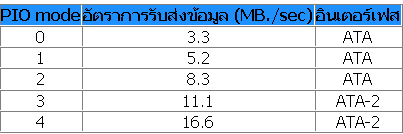
                              

การรับส่งข้อมูลระหว่าง ฮาร์ดดิสก์ กับเครื่องคอมพิวเตอร์อีกแบบหนึ่ง เรียกว่า DMA (Direct Memory Access) คือทำการ รับส่งข้อมูลระหว่างฮาร์ดดิสก์ กับหน่วยความจำโดยไม่ผ่านซีพียู ซึ่งจะกินเวลาในการทำงานของซีพียูน้อยลง แต่ได้อัตราการรับส่ง ข้อมูลพอ ๆ กับ PIO mode 4 และยังแยกการทำงานเป็นหลายโหมดเช่นเดียวกันการรับส่งข้อมูลทาง PIO โดยมีอัตราการรับส่ง ข้อมูลดังตารางต่อไปนี้
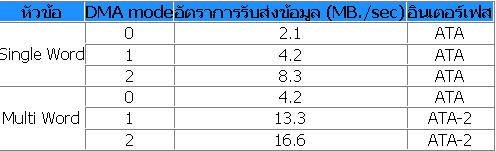
                                 

ฮาร์ดดิสก์ตัวหนึ่งอาจเลือกใช้การรับส่งข้อมูลได้หลายแบบ ขึ้นอยู่กับปัจจัยหลักคือ ฮาร์ดดิสก์ที่ใช้นั้นสนับสนุนการทำงานแบบใดบ้าง ชิปเซ็ตและ BIOS ของเมนบอร์ดต้องสนับสนุนการทำงานในแบบต่าง ๆ และอย่างสุดท้านคือ ระบบปฏิบัติการบางตัว จะมีความสามารถเปลี่ยนหรือเลือกวิธีการรับส่งข้อมูลในแบบต่าง ๆ ได้ เพื่อให้เหมาะสมกับสภาพแวดล้อมในการทำงาน เช่น Windows NT, Windows 98 หรือ UNIX เป็นต้น

ถัดจาก EIDE ในปัจจุบันก็มีการพัฒนามาตราฐานการอินเตอร์เฟส ที่มีความเร็วสูงยิ่งขึ้นไปอีก คือแบบ Ultra DMA/2 หรือเรียกว่า ATA-33 (บางทีเรียก ATA-4) ซึ่งเพิ่มความเร็วขึ้นไป 2 เท่าเป็น 33 MHz และแบบ Ultra DMA/4 หรือ ATA-66 (หรือ ATA-5) ซึ่งกำลังเป็นมาตราฐานอยู่ในปัจจุบัน โดยมีรายละเอียดดังนี้
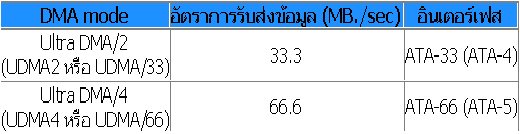
                                          

นอกจากนี้ ปัจจุบันเริ่มจะเห็น ATA-100 กันบ้างแล้วในฮาร์ดดิสก์รุ่นใหม่ ๆ บางยี่ห้อ

SCSI เป็นอินเตอร์เฟสที่แตกต่างจากอินเตอร์เฟสแบบอื่น ๆ มาก ความจริงแล้ว SCSI ไม่ได้เป็น อินเตอร์เฟสสำหรับ ฮาร์ดดิสก์ โดยเฉพาะ ข้อแตกต่างที่สำคัญที่สุดได้แก่ อุปกรณ์ที่จะนำมาต่อกับอินเตอร์เฟสแบบนี้ จะต้องเป็นอุปกรณ์ที่มีความฉลาดหรือ Intelligent พอสมควร (มักจะต้องมีซีพียู หรือหน่วยความจำของตนเองในระดับหนึ่ง) โดยทั่วไป การ์ดแบบ SCSI จะสามารถต่อ อุปกรณ์ได้ 7 ตัว แต่การ์ด SCSI บางรุ่นอาจต่ออุปกรณ์ได้ถึง 14 ตัว (SCSI-2) ในทางทฤษฎีแล้ว เราสามารถนำอุปกรณ์หลายชนิด มาต่อเข้าด้วยกันผ่าน SCSI ได้เช่น ฮาร์ดดิสก์ เทปไดร์ฟ ออปติคัลดิสก์ เลเซอร์พรินเตอร์ หรือแม้กระทั่งเมาส์ ถ้าอุปกรณ์เหล่านั้น มีอินเตอร์เฟสที่เหมาะสม มาดูความเร็วของการรับส่งข้อมูลของ SCSI แบบต่าง ๆ กันดีกว่า
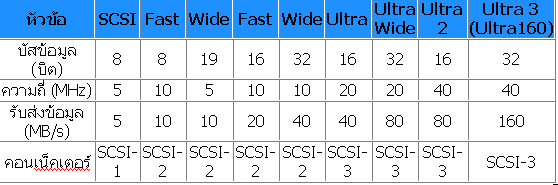
                            

ประสิทธิภาพของฮาร์ดดิสก์ขึ้นอยู่กับอะไรบ้าง

     ความเร็วในการทำงานของฮาร์ดดิสก์ ขึ้นอยู่กับปัจจัยหลายอย่างเช่น ความเร็งในการหมุน กลไกภายใน ความจุข้อมูล ชนิดของ คอนโทรลเลอร์ ขนาดของบัฟเฟอร์ และระบบการเชื่อต่อที่ใช้เป็นต้น ฮาร์ดดิสก์ที่มีกลไกที่เคลื่อนที่เร็วที่สุดเพียงอย่างเดียว อาจจะไม่ใช่ฮาร์ดดิสก์ที่มีประสิทธิภาพดีที่สุดก็ได้

ความเร็วในการหมุนของฮาร์ดดิสก์

     ความเร็วในการหมุนของดิสก์ เป็นสิ่งที่มีผลกับความเร็วในการอ่านและบันทึกข้อมูลมากทีเดียว ฮาร์ดดิสก์ทั่วไป ถ้าเป็นรุ่นธรรมดา จะหมุนอยู่ที่ประมาณ 5,400 รอบต่อนาที (rpm) ส่วนรุ่นที่เร็วหน่อยก็จะเพิ่มเป็น 7,200 รอบต่อนาที ซึ่งถือเป็นมาตราฐาน อยู่ในขณะนี้ และถ้าเป็นรุ่นใหญ่หรือพวก SCSI ในปัจจุบันก็อาจถึง 10,000 รอบหรือมากกว่านั้น ฮาร์ดดิสก์ที่หมุนเร็ว ก็จะสามารถ อ่านข้อมูลในแต่ละเซ็คเตอร์ได้เร็วกว่าตามไปด้วย ทำให้ความเร็วการรับส่งข้อมูลภายใน มีค่าสูงกว่า ฮาร์ดดิสกที่หมุนมากรอบกว่า ก็อาจมีเสียงดัง ร้อน และสึกหรอมากกว่า แต่โดยรวมทั่วไปแล้ว หากราคาไม่เป็นข้อจำกัด ก็ควรเลือกฮาร์ดดิสก์ที่หมุนเร็ว ๆ ไว้ก่อน

อินเตอร์เฟสของฮาร์ดดิสก์

     ดังที่อธิบายแล้วว่า ฮาร์ดดิสก์อินเตอร์เฟสที่นิยมใช้งานกันมากที่สุดสำหรับเครื่องคอมพิวเตอร์ในปัจจุบันได้แก่ แบบ ATA-33 และ ATA-66 ซึ่งมีอัตราการรับส่งข้อมูลที่สูงกว่าแบบเก่า หากต้องการอัตราการรับส่งข้อมูลที่เร็วกว่านี้ ก็ต้องเลือกอินเตอร์เฟสแบบ SCSI ซึ่งจะมีข้อดีคือ มีความเร็วสูงกว่าแบบ EIDE มากและยังสามารถต่ออุปกรณ์ต่าง ๆ ได้ถึง 7 ตัวด้วยกัน โดยที่ราคาก็ยังคงจะ แพงกว่าแบบ EIDE ด้วย จะเหมาะสำหรับงานที่ต้องใช้ความเร็วสูงเช่น Server ของระบบ LAN เป็นต้น

ประเด็นสำคัญของการต่อฮาร์ดดิสก์แบบ IDE ก็คือ แต่ละสายที่ต่อออกมานั้น ตามปกติจะต่อได้ 2 ไดร์ฟ โดยฮาร์ดดิสก์ ที่อยู่บนสาย คนละเส้นจะทำงานพร้อมกันได้ แต่ถ้าอยู่บนสายเส้นเดียวกันจะต้องทำทีละตัว คือไม่ทำงานกับ Master ก็ Slave ตัวเดียวเท่านั้น ในเวลาหนึ่ง ๆ และหากเป็นอุปกรณ์ที่ทำการรับส่งข้อมูลคนละแบบบนสายเดียวกัน เช่นการต่อฮาร์ดดิสก์แบบ UltraDMA/66 ร่วมกับซีดีรอมแบบ PIO mode 4 อุปกรณ์ทุกตัวบนสายเส้นนั้น ก็จะต้องทำตามแบบที่ช้ากว่า ดังนั้น จึงไม่ควรต่อฮาร์ดดิสก์ที่เร็ว ๆ ไว้กับซีดีรอมบนสายเส้นเดียวกัน เพราะจะทำให้ฮาร์ดดิสก์ช้าลงตามไปด้วย


หน่วยความจำ แคช หรือ บัฟเฟอร์ ที่ใช้

     อีกวิธีที่ผู้ผลิตฮาร์ดดิสก์ ใช้เพิ่มประสิทธิภาพการทำงานของฮาร์ดดิสก์ในปัจจุบัน คือการใช้หน่วยความจำแคช หรือบัฟเฟอร์ (Buffer) เพื่อเป็นที่พักข้อมูลก่อนที่จะส่งไปยัง คอมโทรลเลอร์บนการ์ด หรือเมนบอร์ด แคชที่ว่านี้จะทำงานร่วมกับฮาร์ดดิสก์ โดยในกรณีอ่านข้อมูล ก็จะอ่านข้อมูลจากฮาร์ดดิสก์ ในส่วนที่คาดว่าจะถูกใช้งานต่อไปมาเก็บไว้ล่วงหน้า ส่วนในกรณีบันทึกข้อมูล ก็จะรับข้อมูลมาก่อนเพื่อเตรียมที่จะเขียนลงไปทันที ที่ฮาร์ดดิสก์ว่าง แต่ทั้งหมดนี้จะทำอยู่ภายในตัวฮาร์ดดิสก์เอง โดยไม่เกี่ยวข้องกับซีพียูหรือแรมแต่อย่างใด

หน่วยความจำหรือแคชนี้ ในฮาร์ดดิสก์รุ่นราคาถูกจะมีขนาดเล็ก เช่น 128KB หรือบางยี่ห้อก็จะมีขนาด 256-512KB แต่ถ้าเป็นรุ่นที่ราคาสูงขึ้นมา จะมีการเพิ่มจำนวนหน่วยความจำนี้ไปจนถึง 2MB เลยทีเดียว ซึ่งจากการทดสอบพบว่า มีส่วนช่วย ให้การทำงานกับฮาร์ดดิสก์นั้นเร็วขึ้นมาก ถึงแม้กลไกการทำงานของฮาร์ดดิสก์รุ่นนั้น ๆ จะช้ากว่าก็ตาม แต่ทั้งนี้ก็ขึ้นอยู่กับลักษณะการทำงานของโปรแกรมด้วย

ปัจจัยอื่น ๆ ในการเลือกซื้อฮาร์ดดิสก์

     หลังจากที่ได้พอจะรู้จักกับฮาร์ดดิสก์แบบต่าง ๆ กันแล้ว หากต้องการซื้อฮาร์ดดิสก์ที่จะนำมาใช้งานสักตัว ปัจจัยต่าง ๆ ด้านบนนี้ น่าจะเป็นตัวหลักในการกำหนดรุ่นและยี่ห้อของฮาร์ดดิสก์ที่จะซื้อได้ แต่ทั้งนี้ ไม่ควรที่จะมองข้ามปัจจัยอื่น ๆ เหล่านี้ไปด้วย

ความจุของข้อมูล

     ยิ่งฮาร์ดดิสก์ที่มีความจุมาก ราคาก็จะแพงขึ้นไป เลือกให้พอดีกับความต้องการแต่ไปเน้นเรื่องความเร็วดีกว่าครับ เช่นหากมีขนาด 15G 7,200 rpm กับ 20G 5,400 rpm ที่ราคาใกล้เคียงกัน ผมมอลว่าน่าจะเลือกตัว 15G 7,200 rpm ดีกว่า

ความทนทานและการรับประกัน

     อย่าลืมว่า ฮาร์ดดิสก์ เป็นอุปกรณ์ที่ต้องทำงานตลอดเวลา มีการเคลื่อนไหวต่าง ๆ มากมายอยู่ภายในและโอกาสที่จะเสียหายมีได้มาก โดยเฉพาะเรื่องของความร้อนและการระบายความร้อนที่ไม่ดีในเครื่อง ก็เป็นสาเหตุสำคัญของการเสียหาย นอกจากนี้ การเกิด แรงกระแทกแรง ๆ ก็เป็นสาเหตุหลักของ การเสียหายที่พบได้บ่อย ดังนั้น ปัจจัยที่ค่อนข้างสำคัญในการเลือกซื้อฮาร์ดดิสก์ คือ เรื่องระยะเวลาในการรับประกันสินค้า และระยะเวลาในการส่งเคลม ว่าจะช้าหรือเร็วกว่าจะได้ของกลับคืนมาใช้งาน รวมทั้งร้านค้า ที่เราไปซื้อด้วย ที่ในบางครั้ง เวลาซื้อสินค้า จะบอกว่าเปลี่ยนได้ เคลมเร็ว แต่เวลาที่มีปัญหาจริง ๆ ก็จะไม่ค่อยยอมเปลี่ยนสินค้าให้เราแบบง่าย ๆ

เท่าที่เคยได้ยินมา ส่วนมากจะนิยมซื้อยี่ห้อ Quantum, IBM, Maxtor กันครับ ทั้งนี้ก็คงจะขึ้นอยู่กับราคา ความร้อน เสียง ความเร็ว และความชอบของแต่ละคนกันครับ ที่สำคัญคือเรื่องของความเร็วต่าง ๆ ก็เลือกกันให้ดีนะครับ 

ประสิทธิภาพของฮาร์ดดิสก์ขึ้นอยู่กับอะไรบ้าง

     ความเร็วในการทำงานของฮาร์ดดิสก์ ขึ้นอยู่กับปัจจัยหลายอย่างเช่น ความเร็งในการหมุน กลไกภายใน ความจุข้อมูล ชนิดของ คอนโทรลเลอร์ ขนาดของบัฟเฟอร์ และระบบการเชื่อต่อที่ใช้เป็นต้น ฮาร์ดดิสก์ที่มีกลไกที่เคลื่อนที่เร็วที่สุดเพียงอย่างเดียว อาจจะไม่ใช่ฮาร์ดดิสก์ที่มีประสิทธิภาพดีที่สุดก็ได้

ความเร็วในการหมุนของฮาร์ดดิสก์

     ความเร็วในการหมุนของดิสก์ เป็นสิ่งที่มีผลกับความเร็วในการอ่านและบันทึกข้อมูลมากทีเดียว ฮาร์ดดิสก์ทั่วไป ถ้าเป็นรุ่นธรรมดา จะหมุนอยู่ที่ประมาณ 5,400 รอบต่อนาที (rpm) ส่วนรุ่นที่เร็วหน่อยก็จะเพิ่มเป็น 7,200 รอบต่อนาที ซึ่งถือเป็นมาตราฐาน อยู่ในขณะนี้ และถ้าเป็นรุ่นใหญ่หรือพวก SCSI ในปัจจุบันก็อาจถึง 10,000 รอบหรือมากกว่านั้น ฮาร์ดดิสก์ที่หมุนเร็ว ก็จะสามารถ อ่านข้อมูลในแต่ละเซ็คเตอร์ได้เร็วกว่าตามไปด้วย ทำให้ความเร็วการรับส่งข้อมูลภายใน มีค่าสูงกว่า ฮาร์ดดิสกที่หมุนมากรอบกว่า ก็อาจมีเสียงดัง ร้อน และสึกหรอมากกว่า แต่โดยรวมทั่วไปแล้ว หากราคาไม่เป็นข้อจำกัด ก็ควรเลือกฮาร์ดดิสก์ที่หมุนเร็ว ๆ ไว้ก่อน

อินเตอร์เฟสของฮาร์ดดิสก์

     ดังที่อธิบายแล้วว่า ฮาร์ดดิสก์อินเตอร์เฟสที่นิยมใช้งานกันมากที่สุดสำหรับเครื่องคอมพิวเตอร์ในปัจจุบันได้แก่ แบบ ATA-33 และ ATA-66 ซึ่งมีอัตราการรับส่งข้อมูลที่สูงกว่าแบบเก่า หากต้องการอัตราการรับส่งข้อมูลที่เร็วกว่านี้ ก็ต้องเลือกอินเตอร์เฟสแบบ SCSI ซึ่งจะมีข้อดีคือ มีความเร็วสูงกว่าแบบ EIDE มากและยังสามารถต่ออุปกรณ์ต่าง ๆ ได้ถึง 7 ตัวด้วยกัน โดยที่ราคาก็ยังคงจะ แพงกว่าแบบ EIDE ด้วย จะเหมาะสำหรับงานที่ต้องใช้ความเร็วสูงเช่น Server ของระบบ LAN เป็นต้น

ประเด็นสำคัญของการต่อฮาร์ดดิสก์แบบ IDE ก็คือ แต่ละสายที่ต่อออกมานั้น ตามปกติจะต่อได้ 2 ไดร์ฟ โดยฮาร์ดดิสก์ ที่อยู่บนสาย คนละเส้นจะทำงานพร้อมกันได้ แต่ถ้าอยู่บนสายเส้นเดียวกันจะต้องทำทีละตัว คือไม่ทำงานกับ Master ก็ Slave ตัวเดียวเท่านั้น ในเวลาหนึ่ง ๆ และหากเป็นอุปกรณ์ที่ทำการรับส่งข้อมูลคนละแบบบนสายเดียวกัน เช่นการต่อฮาร์ดดิสก์แบบ UltraDMA/66 ร่วมกับซีดีรอมแบบ PIO mode 4 อุปกรณ์ทุกตัวบนสายเส้นนั้น ก็จะต้องทำตามแบบที่ช้ากว่า ดังนั้น จึงไม่ควรต่อฮาร์ดดิสก์ที่เร็ว ๆ ไว้กับซีดีรอมบนสายเส้นเดียวกัน เพราะจะทำให้ฮาร์ดดิสก์ช้าลงตามไปด้วย


หน่วยความจำ แคช หรือ บัฟเฟอร์ ที่ใช้

     อีกวิธีที่ผู้ผลิตฮาร์ดดิสก์ ใช้เพิ่มประสิทธิภาพการทำงานของฮาร์ดดิสก์ในปัจจุบัน คือการใช้หน่วยความจำแคช หรือบัฟเฟอร์ (Buffer) เพื่อเป็นที่พักข้อมูลก่อนที่จะส่งไปยัง คอมโทรลเลอร์บนการ์ด หรือเมนบอร์ด แคชที่ว่านี้จะทำงานร่วมกับฮาร์ดดิสก์ โดยในกรณีอ่านข้อมูล ก็จะอ่านข้อมูลจากฮาร์ดดิสก์ ในส่วนที่คาดว่าจะถูกใช้งานต่อไปมาเก็บไว้ล่วงหน้า ส่วนในกรณีบันทึกข้อมูล ก็จะรับข้อมูลมาก่อนเพื่อเตรียมที่จะเขียนลงไปทันที ที่ฮาร์ดดิสก์ว่าง แต่ทั้งหมดนี้จะทำอยู่ภายในตัวฮาร์ดดิสก์เอง โดยไม่เกี่ยวข้องกับซีพียูหรือแรมแต่อย่างใด

หน่วยความจำหรือแคชนี้ ในฮาร์ดดิสก์รุ่นราคาถูกจะมีขนาดเล็ก เช่น 128KB หรือบางยี่ห้อก็จะมีขนาด 256-512KB แต่ถ้าเป็นรุ่นที่ราคาสูงขึ้นมา จะมีการเพิ่มจำนวนหน่วยความจำนี้ไปจนถึง 2MB เลยทีเดียว ซึ่งจากการทดสอบพบว่า มีส่วนช่วย ให้การทำงานกับฮาร์ดดิสก์นั้นเร็วขึ้นมาก ถึงแม้กลไกการทำงานของฮาร์ดดิสก์รุ่นนั้น ๆ จะช้ากว่าก็ตาม แต่ทั้งนี้ก็ขึ้นอยู่กับลักษณะการทำงานของโปรแกรมด้วย

ปัจจัยอื่น ๆ ในการเลือกซื้อฮาร์ดดิสก์

     หลังจากที่ได้พอจะรู้จักกับฮาร์ดดิสก์แบบต่าง ๆ กันแล้ว หากต้องการซื้อฮาร์ดดิสก์ที่จะนำมาใช้งานสักตัว ปัจจัยต่าง ๆ ด้านบนนี้ น่าจะเป็นตัวหลักในการกำหนดรุ่นและยี่ห้อของฮาร์ดดิสก์ที่จะซื้อได้ แต่ทั้งนี้ ไม่ควรที่จะมองข้ามปัจจัยอื่น ๆ เหล่านี้ไปด้วย

ความจุของข้อมูล

     ยิ่งฮาร์ดดิสก์ที่มีความจุมาก ราคาก็จะแพงขึ้นไป เลือกให้พอดีกับความต้องการแต่ไปเน้นเรื่องความเร็วดีกว่าครับ เช่นหากมีขนาด 15G 7,200 rpm กับ 20G 5,400 rpm ที่ราคาใกล้เคียงกัน ผมมอลว่าน่าจะเลือกตัว 15G 7,200 rpm ดีกว่า

ความทนทานและการรับประกัน

     อย่าลืมว่า ฮาร์ดดิสก์ เป็นอุปกรณ์ที่ต้องทำงานตลอดเวลา มีการเคลื่อนไหวต่าง ๆ มากมายอยู่ภายในและโอกาสที่จะเสียหายมีได้มาก โดยเฉพาะเรื่องของความร้อนและการระบายความร้อนที่ไม่ดีในเครื่อง ก็เป็นสาเหตุสำคัญของการเสียหาย นอกจากนี้ การเกิด แรงกระแทกแรง ๆ ก็เป็นสาเหตุหลักของ การเสียหายที่พบได้บ่อย ดังนั้น ปัจจัยที่ค่อนข้างสำคัญในการเลือกซื้อฮาร์ดดิสก์ คือ เรื่องระยะเวลาในการรับประกันสินค้า และระยะเวลาในการส่งเคลม ว่าจะช้าหรือเร็วกว่าจะได้ของกลับคืนมาใช้งาน รวมทั้งร้านค้า ที่เราไปซื้อด้วย ที่ในบางครั้ง เวลาซื้อสินค้า จะบอกว่าเปลี่ยนได้ เคลมเร็ว แต่เวลาที่มีปัญหาจริง ๆ ก็จะไม่ค่อยยอมเปลี่ยนสินค้าให้เราแบบง่าย ๆ

เท่าที่เคยได้ยินมา ส่วนมากจะนิยมซื้อยี่ห้อ Quantum, IBM, Maxtor กันครับ ทั้งนี้ก็คงจะขึ้นอยู่กับราคา ความร้อน เสียง ความเร็ว และความชอบของแต่ละคนกันครับ ที่สำคัญคือเรื่องของความเร็วต่าง ๆ ก็เลือกกันให้ดีนะครับ
คุยเรื่องRAM

คุยเรื่อง DDR RAM

วันนี้ก็จะพามารู้จักกับ DDR SDRAM ซึ่งตอนนี้ราคาก็ได้ถูกลงแล้วหลังจากตอนที่นำเข้ามาแรกๆ 128Mb เพื่อนๆ หลายคนคงสงสัยว่า DDR SDRAM มันมีประสิทธิภาพแตกต่างกับ SDRAM และ RAMBUS อย่างไร ตามมาดูเลยครับ…


DDR คืออะไร ?

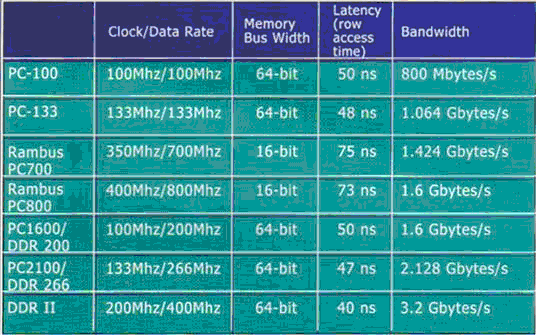
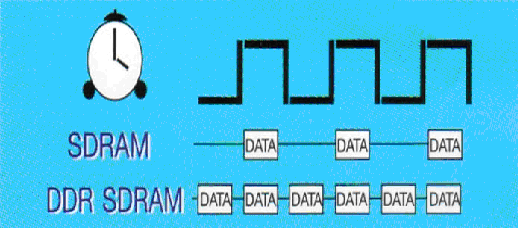
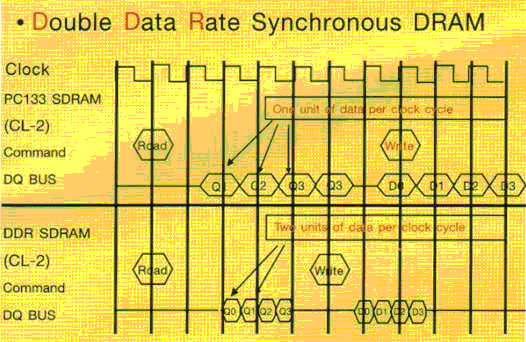
11111 DDR ย่อมาจากคำว่า Double Data Rate ซึ่งเป็นเทคโนโลยีแบบใหม่ ที่จะเข้ามาแทนที่ SDRAM ที่เราใช้อยู่ในปัจจุบัน เนื่องจาก DDR ได้รับการพัฒนา และ ยึดถือหลักการทำงานตามปกติของหน่วยความจำแบบ SDRAM จึงทำให้ทำงานได้เหมือนกัน SDRAM แทบทุกอย่าง แตกต่างกันตรงที่ SDRAM โดยทั่วไปจะมีการโอน ถ่ายข้อมูลเพียงครั้งเดียวในหนึ่งลูกของสัญญาณนาฬิกา ในขณะที่ DDR สามารถส่งข้อมูลได้ถึง 2 ครั้งในหนึ่งลูกของสัญญาณนาฬิกาดังรูป


คือสามารถส่งข้อมูลทั้งขาขึ้นและขาลงได้ในครั้งเดียว ดังนั้นความเร็วที่แท้จริงของ Bus จึงเพิ่มเป็น 266 MHz ซึ่งมากกว่าหน่วยความจำ SDRAM PC133 ถึง 2 เท่า ส่งผลให้ขนาด BANDWIDTH ของหน่วยความจำนั้นสูงขึ้นจากเดิมถึง 50% ทำให้ระบบต่างๆทำงานได้อย่างมีประสิทธิภาพกว่าการใช้หน่วยความจำแบบเดิม


นอกจาก DDR จะทำงานได้เป็น 2 เท่า แล้วยังเป็นการช่วยแก้ปัญหาคอขวดในการใช้งานให้ลดลงอย่างมาก ทำให้เห็นได้ชัดเจนว่า DDR SDRAM เหนือกว่า
SDRAM PC100/133


หน่วยความจำแบบ DDR SDRAM ในปัจจุบันจะมีอยู่ 2 แบบคือ PC1600 และ PC2100 ซึ่งตัวเลขที่ต่อท้ายไม่ได้หมายถึงความเร็วของระบบ BUS ดังเช่นตัวเลขที่ต่อท้าย SDRAM แต่กลับเป็นค่าที่ใช้ระบุขนาด BANDWIDTH ของหน่วยความจำ มาดูในส่วนของ Benchmark กันดีกว่า

What is SOFTWARE?

ความหมายของคำว่าซอฟต์แวร์

บทความ ซอฟต์แวร์ อาจรู้จักในชื่อ ซอฟท์แวร์ รายละเอียดบทความซอฟต์แวร์ประกอบด้วยเนื้อหา ดังนี้
1.ความหมายของซอฟต์แวร์
2.ซอฟท์แวร์และภาษาคอมพิวเตอร์
3.ประเภทของซอฟต์แวร์
ซอฟต์แวร์ระบบ (system software)
-หน้าที่หลักของซอฟต์แวร์ระบบ
-ระบบปฏิบัติการ (operating system) รายชื่อซอฟต์แวร์ระบบปฏิบัติการต่างๆ

ความหมายของซอฟต์แวร์

ซอฟต์แวร์ (software) หรือ ส่วนชุดคำสั่ง และยังมีการสะกด ซอฟต์แวร์ เป็นส่วนของระบบคอมพิวเตอร์ที่ใช้ในการจัดเก็บและประมวลผลข้อมูล ซอฟต์แวร์นั้น นอกจากจะสามารถใช้งานบนคอมพิวเตอร์ได้แล้ว ยังสามารถใช้งานบนเครื่องใช้ หรืออุปกรณ์อื่น เช่น โทรศัพท์มือถือ หรือ หุ่นยนต์ในโรงงาน หรือ เครื่องใช้ไฟฟ้าต่างๆ

คำว่า “ซอฟต์แวร์” ใช้ครั้งแรกโดย จอห์น ดับเบิลยู. เทอร์กีย์ (John W. Turkey) ในปี พ.ศ. 2500 (ค.ศ. 1957) โดยแนวคิดของซอฟต์แวร์ปรากฏ ครั้งแรกในเรียงความของแอลัน ทัวริง

ซอฟต์แวร์ (software) หมายถึง ชุดคำสั่งหรือโปรแกรมที่ใช้สั่งงานให้คอมพิวเตอร์ทำงาน ซอฟต์แวร์จึงหมายถึงลำดับขั้นตอนการทำงานที่เขียนขึ้นด้วย คำสั่งของคอมพิวเตอร์ คำสั่งเหล่านี้เรียงกันเป็นโปรแกรมคอมพิวเตอร

์ โปรแกรมคอมพิวเตอร์ที่ใช้สั่งงานคอมพิวเตอร์จึงเป็นซอฟต์แวร์ เพราะเป็นลำดับขั้นตอนการทำงานของคอมพิวเตอร์ คอมพิวเตอร์เครื่องหนึ่งทำงานแตกต่างกัน ได้มากมายด้วยซอฟต์แวร์ที่แตกต่างกัน ซอฟต์แวร์ จึงหมายรวมถึงโปรแกรมคอมพิวเตอร์ทุกประเภทที่ทำให้คอมพิวเตอร์ทำงานได้

โปรแกรมคอมพิวเตอร์ (computer program) คือ กลุ่มชุดคำสั่งที่ใช้อธิบายชิ้นงาน หรือกลุ่มงานที่จะประมวลผลโดย คอมพิวเตอร์ โปรแกรมคอมพิวเตอร์อาจหมายถึง ซอฟต์แวร์ แอปพลิเคชัน หรือ โปรแกรม

โปรแกรมคอมพิวเตอร์ส่วนใหญ่นั้นเป็นชุดคำสั่งที่ออกแบบตามอัลกอริทึม โดยปกติแล้วเขียนโดยโปรแกรมเมอร์ หรือไม่ก็สร้างโดยโปรแกรมอื่น

การที่คอมพิวเตอร์ดำเนินการให้ประโยชน์ได้มากมายมหาศาลจะอยู่ที่ซอฟต์แวร์ ซอฟต์แวร์จึงเป็นส่วนสำคัญของระบบคอมพิวเตอร์ หากขาดซอฟต์แวร์คอมพิวเตอร์ก็ไม่สามารถทำงานได้ ซอฟต์แวร์จึงเป็นสิ่งที่จำเป็น และมีความสำคัญมาก และเป็นส่วนประกอบหนึ่งที่ทำให้ระบบสารสนเทศเป็นไปได้ตามที่ต้องการ

ซอฟท์แวร์และภาษาคอมพิวเตอร์

เมื่อมนุษย์ต้องการใช้คอมพิวเตอร์ช่วยในการทำงาน มนุษย์จะต้องบอกขั้นตอนวิธีการให้คอมพิวเตอร์ทราบ การที่บอกสิ่งที่มนุษย์เข้าใจให้คอมพิวเตอร์รับรู้ และทำงานได้อย่างถูกต้อง จำเป็นต้องมีสื่อกลาง เราเรียกสื่อกลางนี้ว่า ภาษาคอมพิวเตอร์

เนื่องจากคอมพิวเตอร์ทำงานด้วยสัญญาณทางไฟฟ้า ใช้แทนด้วยตัวเลข 0 และ 1 ได้ ผู้ออกแบบคอมพิวเตอร์ใช้ตัวเลข 0 และ 1 นี้เป็นรหัสแทนคำสั่งในการสั่งงาน คอมพิวเตอร์ รหัสแทนข้อมูลและคำสั่งโดยใช้ระบบเลขฐานสองนี้ คอมพิวเตอร์สามารถเข้าใจได้ เราเรียกเลขฐานสองที่ประกอบกันเป็นชุดคำสั่ง และใช้สั่งงานคอมพิวเตอร์ว่าภาษาเครื่อง

ภาษาเครื่อง (Machine Language) นั้น เป็นภาษาที่เครื่องคอมพิวเตอร์สามารถเข้าใจ และสามารถติดต่อได้โดยตรงกับเครื่องคอมพิวเตอร์

คอมพิวเตอร์ชุดหนึ่ง ๆ ที่เขียนขึ้นเป็นระบบรหัส หรือที่เรียกว่า ภาษาเครื่อง มนุษย์ผู้ใช้จะมีข้อยุ่งยากมาก เพราะเข้าใจและจดจำได้ยาก จึงมีผู้สร้างภาษา คอมพิวเตอร์ในรูปแบบที่เป็นตัวอักษร เป็นประโยคข้อความ ซึ่งเริ่มใกล้เคียงภาษามนุษย์มากขึ้น เช่น ภาษาแอสเซมบลี (Assembly) ภาษาซี (C) ภาษาโคบอล (COBOL) ภาษาเบสิก (BASIC) หรือ เป็นภาษาที่ค่อนข้างจะสมัยใหม่ เช่น ภาษา C# ภาษาจาวา เป็นต้น

ภาษาในลักษณะดังกล่าวนี้เรียกว่า ภาษาคอมพิวเตอร์ระดับสูง ภาษาระดับสูงมีอยู่มากมาย บางภาษามีความเหมาะสมกับการใช้สั่งงานการคำนวณทางคณิตศาสตร์ และวิทยาศาสตร์ บางภาษามีความเหมาะสมไว้ใช้สั่งงานทางด้านการจัดการข้อมูล ในการทำงานของคอมพิวเตอร์ คอมพิวเตอร์จะแปลภาษาระดับสูง ให้เป็นภาษา เครื่อง ดังนั้น จึงมีผู้พัฒนาโปรแกรมคอมพิวเตอร์สำหรับแปลภาษาคอมพิวเตอร์ระดับสูงให้เป็นภาษาเครื่อง โปรแกรมที่ใช้แปลภาษาคอมพิวเตอร์ระดับสูง ให้เป็นภาษาเครื่องเรียกว่า คอมไพเลอร์ (compiler) หรือ อินเทอร์พรีเตอร์ (interpreter)

คอมไพเลอร์ (compiler) หรือ โปรแกรมแปลโปรแกรม, ตัวแปลโปรแกรม เป็น โปรแกรมคอมพิวเตอร์ ที่ทำหน้าแปลโปรแกรมที่เขียนเป็นภาษาระดับสูงทั้ง โปรแกรมให้เป็นภาษาเครื่องก่อน แล้วจึงให้คอมพิวเตอร์ทำงานตามภาษาเครื่องนั้น ขึ้นตอนการทำงานหลัก ๆ ของคอมไพเลอร์ ซึ่งในปัจจุบัน คอมไพเลอร์สมัยใหม่ อาจมีขั้นตอนมากกว่า และมีเทคนิคเพิ่มเติมขึ้นมาก ซึ่งแต่ละผลิตภัณฑ์ จะไม่บอกรายละเอียดการทำงาน เนื่องจากเป็นความลับของแต่ละผลิตภัณฑ์ของตน

ในปัจจุบันนี้มีภาษาจาวา (Java) , ดอดเน็ต (.NET FramWork) การคอมไพล์ได้เปลี่ยนไปเป็นการแปลเป็นภาษาเป้าหมาย และหากเป็นจาวา ก็ใช้ จาวาวิชวลเมอฃีน (Java Visual Machine : JVM) หรือหากเป็น ดอดเน็ต จะใช้ (Just In Time :JIT Compiler) เพื่อแปลไปเป็นภาษาเครื่อง ตามแต่สภาวะแวดล้อมของเครื่อง (Environment) ในขณะนั้น เพื่อทำงานต่อไป

ตัวแปลโปรแกรมส่วนใหญ่ จะทำการแปล รหัสต้นแบบ (source code) ที่เขียนในภาษาระดับสูง เป็น ภาษาระดับต่ำ หรือภาษาเครื่อง ซึ่งคอมพิวเตอร์สามารถที่จะทำงานได้โดยตรง. อย่างไรก็ตาม การแปลจากภาษาระดับต่ำเป็นภาษาระดับสูง ก็เป็นไปได้ โดยใช้ตัวแปลโปรแกรมย้อนกลับ (decompiler)

ขั้นตอนการทำงานของตัวแปลโปรแกรม

ผลลัพธ์ของการแปลโปรแกรม (คอมไพล์) โดยทั่วไป ที่เรียกว่า ออบเจกต์โค้ด จะประกอบด้วยภาษาเครื่อง (Machine code)ที่เต็มไปด้วยข้อมูลเกี่ยวกับ ชื่อและ สถานที่ของแต่ละจุด และการเรียกใช้วัตถุภายนอก (Link object)(สำหรับฟังก์ชันที่ไม่ได้อยู่ใน อ็อบเจกต์) สำหรับเครื่องมือที่เราใช้รวม อ็อบเจกต์เข้าด้วยกัน จะเรียกว่าโปรแกรมเชื่อมโยงเพื่อที่ผลลัพธ์ที่ออกมาในขั้นสุดท้าย เป็นไฟล์ที่ผู้ใช้งานทั่วไปสามารถใช้งานได้สะดวก

ตัวแปลภาษาตัวที่สมบูรณ์ตัวแรก คือ ภาษาฟอร์แทรน (FORTRAN) ของ ไอบีเอ็ม ในปี ค.ศ. 1957 และ ภาษาโคบอล (COBOL) ก็เป็นตัวแปลภาษาตัวแรก ๆ ที่สามารถทำงานได้บนหลาย ๆ สถาปัตยกรรมทางคอมพิวเตอร์. การพัฒนาตัวแปลภาษารุดหน้าอย่างรวดเร็ว และเริ่มมีรูปแบบที่ชัดเจนยิ่งขึ้นต่อมา ในช่วงทศวรรษ 1960

การแปลโปรแกรม

กระบวนการแปลโปรแกรมแบบอ่านทีเดียวแล้วแปล เครื่องมือที่ใช้แปลโปรแกรมเรียกว่าตัวแปลโปรแกรม การทำงานเริ่มจากตัวแปลโปรแกรมจะอ่านซอร์สโค้ด ของภาษานั้นๆ แล้วเริ่มตรวจสอบความผิดพลาด ถ้าพบก็จะแปลโปรแกรมไม่ผ่านและให้ผู้ใช้แก้ไขซอร์สโค้ดก่อน เมื่อคอมไพล์ผ่าน ตัวแปลโปรแกรมก็จะสร้าง ไฟล์วัตถุ (.obj บนดอส และ .o บนลินุกซ์) ขึ้นมา แล้วตัวแปลโปรแกรมจะทำการเชื่อมโยงแฟ้มข้อมูลวัตถุเข้ากับซอร์สโค้ด และสร้างไฟล์เอ็กซ์คิวต์ (.exe บนดอส) ขึ้นมา

อินเทอร์พรีเตอร์ (interpreter) หรือ โปรแกรมแปลคำสั่ง, ตัวแปลคำสั่ง, หรือ อินเทอร์พรีเตอร์ (interpreter) หมายถึงโปรแกรมคอมพิวเตอร์ ที่ทำงานตาม ชุดคำสั่งที่เขียนไว้ทันที ซึ่งจะทำการแปลทีละคำสั่ง แล้วให้คอมพิวเตอร์ทำตามคำสั่งนั้น เมื่อทำเสร็จแล้วจึงมาทำการแปลคำสั่งลำดับต่อไป

โดยทั่วไปแล้วการทำงานของโปรแกรมผ่านโปรแกรมแปลคำสั่งจะช้ากว่าทำงานจากโปรแกรมที่ผ่านการแปลโปรแกรมเป็นภาษาเครื่องแล้ว เพราะโปรแกรมแปลคำสั่งจะต้องแปลแต่ละคำสั่งในระหว่างการทำงานว่าจะต้องทำอะไรต่อไป

ตัวอย่างภาษาที่มีการใช้โปรแกรมแปลคำสั่ง เช่น ภาษาเบสิก, ภาษาเพิร์ล, ภาษาพีเอชพี

ภาษาเบสิก (BASIC programming language) เป็นภาษาโปรแกรมที่ออกแบบมาให้ใช้งานได้ง่าย และยังได้รับความนิยมมาจนถึงทุกวันนี้ เบสิกออกแบบมาให้ใช้กับคอมพิวเตอร์ตามบ้าน

ชื่อภาษาเบสิก หรือ BASIC ย่อมาจาก Beginner’s All-purpose Symbolic Instruction Code ต้องเขียนด้วยตัวพิมพ์ใหญ่เสมอ

บริษัทไมโครซอฟท์ได้นำภาษาเบสิกมาปรับปรุงให้ทันสมัย และพัฒนาเครื่องมือพัฒนาโปรแกรม Visual Basic ทำให้เบสิกได้รับความนิยมในการพัฒนาโปรแกรมยุคใหม่ รุ่นล่าสุดของวิชวลเบสิกเรียกว่า VB.NET

ภาษาเพิร์ล หรือ Perl (ย่อมาจาก Practical Extraction and Report Language) เป็นภาษาโปรแกรมแบบไดนามิก พัฒนาโดยนายแลร์รี วอลล์ (Larry Wall) ในปี ค.ศ. 1987 เพื่อใช้งานกับระบบปฏิบัติการยูนิกซ์

ภาษาเพิร์ล นั้นถูกออกแบบมาให้ใช้งานได้ง่าย โครงสร้างของภาษาจึงไม่ซับซ้อน มีลักษณะคล้ายกับภาษาซี นอกจากนี้เพิร์ลยังได้แนวคิดบางอย่าง มาจากเชลล์สคริปต์, ภาษา AWK, sed และ Lisp

ปัจจุบันเวอร์ชันล่าสุดคือ 5.10.0 (ออกเมื่อเดือนธันวาคม 2007)

ภาษาพีเอชพี (PHP) คือ ภาษาคอมพิวเตอร์ในลักษณะเซิร์ฟเวอร์-ไซด์ สคริปต์ โดยลิขสิทธิ์อยู่ในลักษณะโอเพนซอร์ส ภาษาพีเอชพีใช้สำหรับจัดทำเว็บไซต์ และแสดงผลออกมาในรูปแบบ HTML โดยมีรากฐานโครงสร้างคำสั่งมาจากภาษา ภาษาซี ภาษาจาวา และ ภาษาเพิร์ล ซึ่ง ภาษาพีเอชพี นั้นง่ายต่อการเรียนรู้ ซึ่งเป้าหมายหลักของภาษานี้ คือให้นักพัฒนาเว็บไซต์สามารถเขียน เว็บเพจ ที่มีความตอบโต้ได้อย่างรวดเร็ว

ภาษาพีเอชพี ในชื่อภาษาอังกฤษว่า PHP ซึ่งใช้เป็นคำย่อแบบกล่าวซ้ำ จากคำว่า PHP Hypertext Preprocessor หรือชื่อเดิม Personal Home Page

ซอฟต์แวร์ หรือโปรแกรมคอมพิวเตอร์จึงเป็นส่วนสำคัญที่ควบคุมการทำงานของคอมพิวเตอร์ให้ดำเนินการตามแนวความคิดที่ได้กำหนดไว้ล่วงหน้าแล้ว คอมพิวเตอร์ต้องทำงานตามโปรแกรมเท่านั้น ไม่สามารถทำงานที่นอกเหนือจากที่กำหนดไว้ในโปรแกรม

ประเภทของซอฟต์แวร์

ซอฟต์แวร์หรือโปรแกรมคอมพิวเตอร์ที่มีผู้พัฒนาขึ้นเพื่อใช้งานกับคอมพิวเตอร์มีมากมาย ซอฟต์แวร์เหล่านี้อาจได้รับการพัฒนาโดยผู้ใช้งานเอง หรือผู้พัฒนาระบบ หรือผู้ผลิตจำหน่าย ซอฟต์แวร์หรือโปรแกรมคอมพิวเตอร์สามารถแบ่งได้เป็นหลายประเภท

  • ซอฟต์แวร์ที่ผู้ใช้เขียนขึ้นเองเพื่อให้ตรงกับความต้องการ
  • ซอฟต์แวร์ที่มีคนทำสำเร็จรูปไว้ขาย เช่น ซอฟต์แวร์สำหรับวาดภาพ (graphics) ซอฟต์แวร์ประมวลผลคำ (word processing) ซอฟต์แวร์ตารางจัดการ (spread sheet)
  • ซอฟต์แวร์ระบบ (systems software) ซึ่งเป็นโปรแกรมซอฟต์แวร์ที่ควบคุมการทำงานของเครื่องคอมพิวเตอร์ มีบางส่วนติดตั้งมาจากโรงงานที่ผลิต
  • ซอฟต์แวร์ระบบปฏิบัติการ (operating system) ที่จะทำหน้าที่เหมือนแม่บ้านคอยดูแลให้อุปกรณ์ต่าง ๆ ทำงานให้ประสานกัน

หากแบ่งแยกประเภทของซอฟต์แวร์ตามสภาพการทำงาน พอแบ่งแยกซอฟต์แวร์ได้เป็นสองประเภท คือ ซอฟต์แวร์ระบบ (system software) และซอฟต์แวร์ประยุกต์ (application software)

ซอฟต์แวร์ระบบ (system software)

ซอฟต์แวร์ระบบ (system software) คือ ซอฟต์แวร์ที่บริษัทผู้ผลิตสร้างขึ้นมาเพื่อใช้จัดการกับระบบ หน้าที่การทำงานของซอฟต์แวร์ระบบคือดำเนินงาน พื้นฐานต่าง ๆ ของระบบคอมพิวเตอร์ เมื่อเราเปิดเครื่องคอมพิวเตอร์ ทันทีที่มีการจ่ายกระแสไฟฟ้าให้กับคอมพิวเตอร์ คอมพิวเตอร์จะทำงานตามโปรแกรมทันที โปรแกรมแรกที่สั่งคอมพิวเตอร์ทำงานนี้เป็นซอฟต์แวร์ระบบ ซอฟต์แวร์ระบบอาจเก็บไว้ในรอม หรือในแผ่นจานแม่เหล็ก หากไม่มีซอฟต์แวร์ระบบ คอมพิวเตอร์จะทำงานไม่ได้

หน้าที่หลักของซอฟต์แวร์ระบบประกอบด้วย

  • 1.การจัดการหน่วยรับเข้าและหน่วยส่งออก เช่น รับการกดแป้นต่าง ๆ บนแผงแป้นอักขระ ส่งรหัสตัวอักษรออกทางจอภาพหรือเครื่องพิมพ์ ติดต่อกับ อุปกรณ์รับเข้า และส่งออกอื่น ๆ เช่น เมาส์ อุปกรณ์สังเคราะห์เสียง
  • 2.การจัดการหน่วยความจำเพื่อนำข้อมูลจากแผ่นบันทึกมาบรรจุยังหน่วยความจำหลัก หรือในทำนองกลับกัน คือนำข้อมูลจาก หน่วยความจำหลักมา เก็บไว้ในแผ่นบันทึก
  • 3.เป็นตัวเชื่อมต่อระหว่างผู้ใช้งานกับคอมพิวเตอร์ สามารถใช้งานได้ง่ายขึ้น เช่น การขอดูรายการสารบบในแผ่นบันทึก การทำสำเนาแฟ้มข้อมูล

ซอฟต์แวร์ระบบยังใช้เป็นเครื่องมือในการพัฒนาซอฟต์แวร์อื่น ๆ และยังรวมไปถึงซอฟต์แวร์ที่ใช้ในการแปลภาษาต่าง ๆ

ซอฟต์แวร์ระบบพื้นฐานที่เห็นกันทั่วไป แบ่งออกเป็นระบบปฏิบัติการ และตัวแปลภาษา ซอฟต์แวร์ทั่งสองประเภทนี้ทำให้เกิดพัฒนาการประยุกต์ใช้งานได้ง่ายขึ้น

ระบบปฏิบัติการ (operating system)

ระบบปฏิบัติการ หรือที่เรียกย่อ ๆ ว่า โอเอส (Operating System : OS) เป็นซอฟต์แวร์ ที่ทำหน้าที่เป็นตัวกลาง ระหว่างฮาร์ดแวร์ และซอฟต์แวร์ประยุกต์ทั่วไป บางครั้งเราอาจะเห็นระบบปฏิบัติการเป็นเฟิร์มแวร์ก็ได้

ระบบปฏิบัติการมีหน้าที่หลัก ๆ คือ การจัดสรรทรัพยากรในเครื่องคอมพิวเตอร์ เพื่อให้บริการซอฟต์แวร์ประยุกต์ ในเรื่องการรับส่ง และจัดเก็บข้อมูลกับฮาร์ดแวร์ เช่น การส่งข้อมูลภาพไปแสดงผลที่จอภาพ การส่งข้อมูลไปเก็บหรืออ่านจากฮาร์ดดิสก์ การรับส่งข้อมูลในระบบเครือข่าย การส่งสัญญานเสียงไปออกลำโพง หรือจัดสรรพื้นที่ในหน่วยความจำ ตามที่ซอฟต์แวร์ประยุกต์ร้องขอ รวมทั้งทำหน้าที่จัดสรรเวลาการใช้หน่วยประมวลผลกลาง ในกรณีที่อนุญาตให้รันซอฟต์แวร์ประยุกต์หลายๆตัวพร้อมๆกัน

ระบบปฏิบัติการ ช่วยให้ตัวซอฟต์แวร์ประยุกต์ ไม่ต้องจัดการเรื่องเหล่านั้นด้วยตนเอง เพียงแค่เรียกใช้บริการจากระบบปฏิบัติการก็พอ ทำให้พัฒนาซอฟต์แวร์ประยุกต์ได้ง่ายขึ้น

รายชื่อซอฟต์แวร์ระบบปฏิบัติการ

รายชื่อต่อไปนี้เป็นรายชื่อของ ระบบปฏิบัติการ ต่างๆ ที่มีขึ้น
1. CP/M
2. MP/M
3. TRS-DOS
4. ProDOS
5. DOS
6. Microsoft Windows
7. Linux
8. Unix
9. Mac OS
10. FreeBSD
11. OS/2
12. RISC OS
13. BeOS
14. Amiga
15. Plan9
16. NetWare
17. MorphOS
18. Zaurus
19. VMS
20. EPOC
21. Solaris
22. IRIX
23. Darwin
24. HPUX
25. UNICOS
26. MINIX

ระบบปฏิบัติการที่เป็นที่นิยมในคอมพิวเตอร์ส่วนบุคคลทุกวันนี้ ได้แก่ ไมโครซอฟท์ วินโดวส์ แมคโอเอส และลินุกซ์

นอกจากนี้ ยังมีระบบปฏิบัติการตระกูลยูนิกซ์ ซึ่งได้รับความนิยมในเครื่องเซิร์ฟเวอร์ที่ใช้กันในหน่วยงาน ระบบปฏิบัติการตระกูลยูนิกซ์ที่เป็นที่รู้จักกันดี ได้แก่ ยูนิกซ์ตระกูลบีเอสดี เอไอเอ็กซ์ และโซลาริส และรวมถึงลีนุกซ์ซึ่งพัฒนาโดยอาศัยหลักการเดียวกันกับยูนิกซ

ระบบปฏิบัติการบางตัว ถูกออกแบบมาสำหรับการเรียนการสอนวิชาระบบปฏิบัติการโดยเฉพาะ เช่น มินิกซ์ และ ซินู หรือ พินโทส

ในอุปกรณ์อื่น ๆ ที่ควบคุมด้วยระบบคอมพิวเตอร์ ก็อาจมีระบบปฏิบัติการเช่นกัน เช่น ระบบปฏิบัติการ ปาล์มโอเอส หรือ ซิมเบียน ในโทรศัพท์มือถือ หรือระบบปฏิบัติการ TRON ในเครื่องใช้ไฟฟ้าตามบ้าน

ระบบปฏิบัติการที่นิยมใช้กันมากและเป็นที่รู้จักกันดี เช่น ดอส (Disk Operating System : DOS) ไมโครซอฟท์ วินโดวส์ (Microsoft Windows) โอเอสทู (OS/2) ยูนิกซ์ (UNIX) แมคโอเอส (MAC OS) ลินุกซ์ (Linux)

1) ดอส (Disk Operating System : DOS)เป็นซอฟต์แวร์จัดระบบงานที่พัฒนามานานแล้ว การใช้งานจึงใช้คำสั่งเป็นตัวอักษร ดอสเป็นซอฟต์แวร์ที่รู้จักกันดีในหมู่ผู้ใช้ไมโครคอมพิวเตอร์

2) ไมโครซอฟท์ วินโดวส์ (Microsoft Windows)เป็นระบบปฏิบัติการที่พัฒนาต่อจากดอส เพื่อเน้นการใช้งานที่ง่ายขึ้น สามารถทำงานหลายงานพร้อมกันได้ โดยงานแต่ละงานจะอยู่ในกรอบช่องหน้าต่างที่แสดงผลบนจอภาพ การใช้งานเน้นรูปแบบกราฟิก ผู้ใช้งานสามารถใช้เมาส์เลื่อนตัวชี้ตำแหน่งเพื่อเลือกตำแหน่งที่ปรากฏบนจอภาพ ทำให้ใช้งานคอมพิวเตอร์ได้ง่าย วินโดวส์จึงได้รับความนิยมในปัจจุบัน

3) โอเอสทู (OS/2)เป็นระบบปฏิบัติการแบบเดียวกับวินโดว์ส แต่บริษัทผู้พัฒนาคือ บริษัท ไอบีเอ็ม เป็นระบบปฏิบัติการที่ให้ผู้ใช้สามารถใช้ทำงานได้หลายงานพร้อมกัน และการใช้งานก็เป็นแบบกราฟิกเช่นเดียวกับวินโดวส์

4) ยูนิกซ์ (UNIX) เป็นระบบปฏิบัติการที่พัฒนามาตั้งแต่ครั้งใช้กับเครื่องมินิคอมพิวเตอร์ ระบบปฎิบัติการยูนิกซ์เป็นระบบปฏิบัติการที่สามารถใช้งานได้หลายงานพร้อมกัน และทำงานได้หลาย ๆ งานในเวลาเดียวกัน ยูนิกซ์จึงใช้ได้กับเครื่องที่เชื่อมโยงและต่อกับเครื่องปลายทางได้หลายเครื่องพร้อมกัน

5) แมคโอเอส (Mac OS)เป็นระบบปฏิบัติการสำหรับเครื่องคอมพิวเตอร์แมคอินทอช โดยทั้งคู่เป็นผลิตภัณฑ์ของ บรรษัท แอปเปิลคอมพิวเตอร์. แมคโอเอสเป็นระบบปฏิบัติการที่มีส่วนต่อประสานกับผู้ใช้แบบกราฟิก (GUI) รายแรกที่ประสบความสำเร็จในเชิงพาณิชย์ รุ่นแรกๆ ของระบบปฏิบัติการนี้ ไม่ได้ใช้ชื่อแมคโอเอส, อันที่จริงระบบปฏิบัติการนี้ในรุ่นแรกๆ ยังไม่มีชื่อเรียกด้วยซ้ำ แมคโอเอสเป็นระบบปฏิบัติการที่นิยมเป็นอันดับสองรองจาก วินโดวส์

6) ลินุกซ์ (Linux) และรู้จักในชื่อ กนู/ลินุกซ์ (GNU/Linux) เป็นระบบปฏิบัติการที่นิยมตัวหนึ่งในฐานะซอฟต์แวร์เสรี และซอฟต์แวร์โอเพนซอร์ส ลินุกซ์มีลักษณะคล้ายระบบปฏิบัติการยูนิกซ์ โดยมีลินุกซ์ เคอร์เนล เป็นศูนย์กลางทำงานร่วมกับไลบรารีและเครื่องมืออื่น ลินุกซ์นิยมจำหน่ายหรือแจกฟรีในลักษณะเป็นแพคเกจ โดยผู้จัดทำจะรวมซอฟต์แวร์สำหรับใช้งานในด้านอื่นเป็นชุดเข้าด้วยกัน

ติดต่อเรา

logo

บริษัท ทริปเปิ้ล เอ็ม ซิสเต็มส์ เทคโนโลยี จำกัด
100/305 ซ.ประชาอุทิศ 33 แยก 7 แขวงบางมด
เขตทุ่งครุ กรุงเทพมหานคร 10140

โทรศัพท์: 02-873-2043, 081-346-7381
อีเมล์: information@triplemsys.com

เกี่ยวกับเรา

ทริปเปิ้ล เอ็ม ซิสเต็มส์ เทคโนโลยี เป็นบริษัทที่ให้บริการทางด้านคอมพิวเตอร์ครบวงจร รวมถึงการวางระบบเครือข่ายในสำนักงาน และการบำรุงรักษาระบบ ให้บริการด้วยทีมงานมืออาชีพมีความรู้ความสามารถจากประสบการณ์ทำงานที่ผ่านมาครบทุกด้าน บริษัทจะนำเสนอผลิตภัณฑ์ที่มีประสิทธิภาพ ได้มาตรฐาน และน้อมนำนวัตกรรมใหม่ๆ เข้ามารวมถึงบริการที่ดีเลิศ โดยคำนึงถึงความต้องการของลูกค้าเป็นหลัก เพื่อความพึงพอใจอันสูงสุดจากลูกค้า

© Triple M System Technology Co., Ltd
Wie op zoek is naar een betrouwbare plek om online te gokken, let vaak op spelaanbod, uitbetalingssnelheid en klantenservice. Een breed assortiment aan videoslots, tafelspellen en live dealer opties trekt spelers aan, terwijl eerlijke bonusvoorwaarden het vertrouwen vergroten. Voor Nederlandse liefhebbers die hun geluk willen beproeven, is DiceSpin Casino Nederland regelmatig onderwerp van gesprek op forums en in reviews. Daarnaast kijken veel spelers naar de beschikbaarheid van iDEAL-stortingen, de snelheid van verificatie en de kwaliteit van de mobiele interface. Wie bewust speelt, stelt vooraf een budget vast en kiest platforms met een duidelijke licentie en transparante regels.
Players comparing online casino options for https://sadlersbistro.co.uk can review https://sadlersbistro.co.uk as a focused destination for the topic.
Wer in Deutschland Online-Glücksspiel betreibt, achtet besonders auf gültige Lizenzen, transparente Bonusregeln und einen zuverlässigen Kundendienst rund um die Uhr. Viele erfahrene Spieler empfehlen deshalb, neue Anbieter zunächst im Testmodus zu prüfen, bevor man echtes Geld einzahlt. Eine überzeugende Auswahl an Spielautomaten, Tischspielen und einem ansprechenden Live-Casino bietet Honeybetz. Die Plattform überzeugt durch schnelle Auszahlungen, faire Umsatzbedingungen sowie ein Treueprogramm, das auch Vielspieler mit individuellen Vorteilen belohnt.